Bird Identification and Art


IMG_6815
Bird Journal#1

Little did I know when I started my birding journey, that I would ultimately improve my multi-tasking skills.

Loaded with all the equipment that I thought necessary in the beginning, I felt very much like a pack mule. Once we were actually at a spot where we might look for birds, it became a real juggling act to use the binoculars correctly, find the bird, take note of any distinguishing characteristics such as beak size/color, feet, wing markings, overall bird color, chest color, facial markings/bands. Once in my binoculars, I then tried to get the found bird in my camera lens so I could record the find and use my photo to aid me in identification once I was in the cozy confines of my own home or hotel room. And all of the above has to be accomplished very quickly before the bird decides to fly away. That “flying quickly away thing” made me focus on shorebirds in my first year of birding because they tend to stand around and give me time to examine them thoroughly.

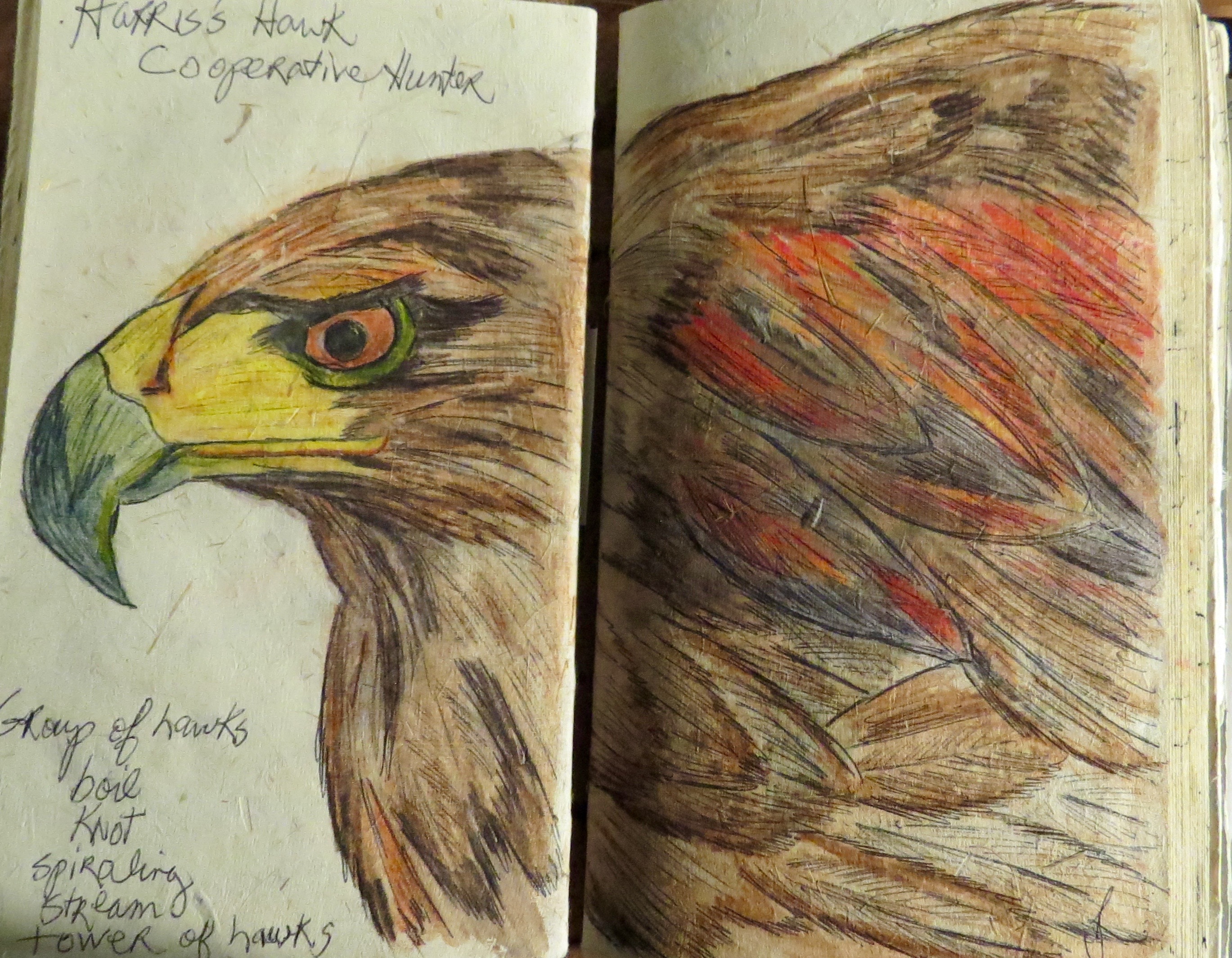
In the beginning it was very overwhelming and I found it difficult to remember all the different birds we were seeing. My birding buddy Linda and I had already started keeping a written birding journal so we decided to pick one of our favorite birds from each day’s sighting to draw and paint in our birding journals. I quickly discovered that if I drew and painted the bird de jour then I was more likely to be able to identify it the next time our paths crossed.
IMG_6820
Bird Journal #2

My original journal was a gift from BFF Linda, The papers within it were not special art paper or watercolor paper, but this journal is my favorite one. After the bird drawings were watercolored and the paper dried again, it became crinkly. My love of birds is right up there with my love of books. And that love is defined by the texture of the papers, the sound of them, the book jacket graphics and the boards and end papers. True bibliophile I am.

And a crazy thing happened along my birding journey…I found my art skills improving. What joy to discover that two loves can be combined with each enhancing the other. So every birding adventure for me now entails even more paraphernalia…the drawing pencils and watercolors that can capture my bird of the day for eternity in my birding journals.

Happy Bird searching!!


IMG_6819

Iris and Stanley


IMG_2255
Stanley & Iris -2014

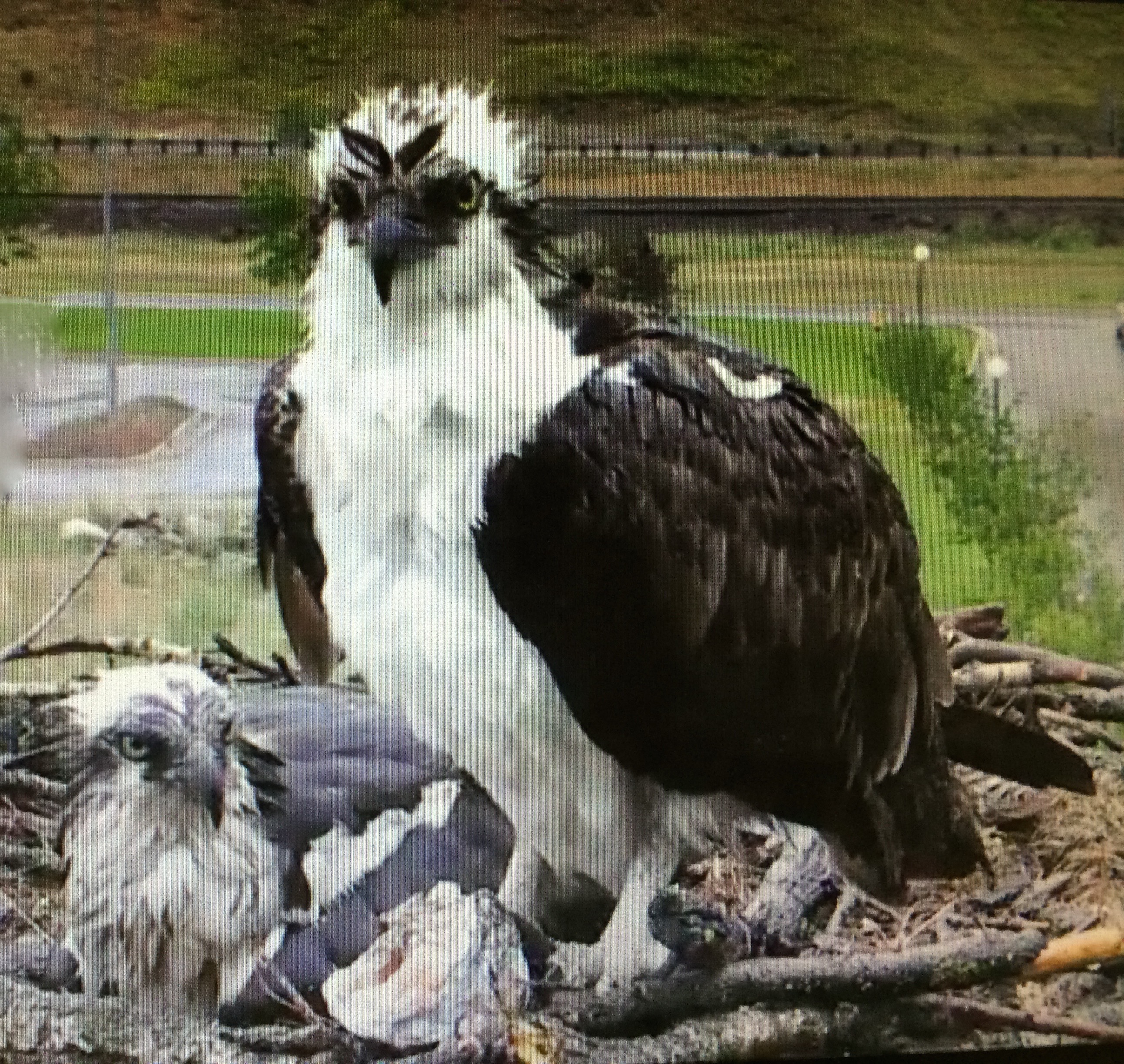
Just who are Iris and Stanley? They are two beautiful Ospreys that share their lives with us on a daily basis thanks to the Cornell live bird cams. This can be a blessing or a curse for me. A blessing in that I get to observe the majesty of their bodies, their behavior and indomitable spirits. A curse because when tragedy strikes their family it saddens me to the point of tears. This is what happened this year as Iris and Stanley began to add more offspring to their large family.

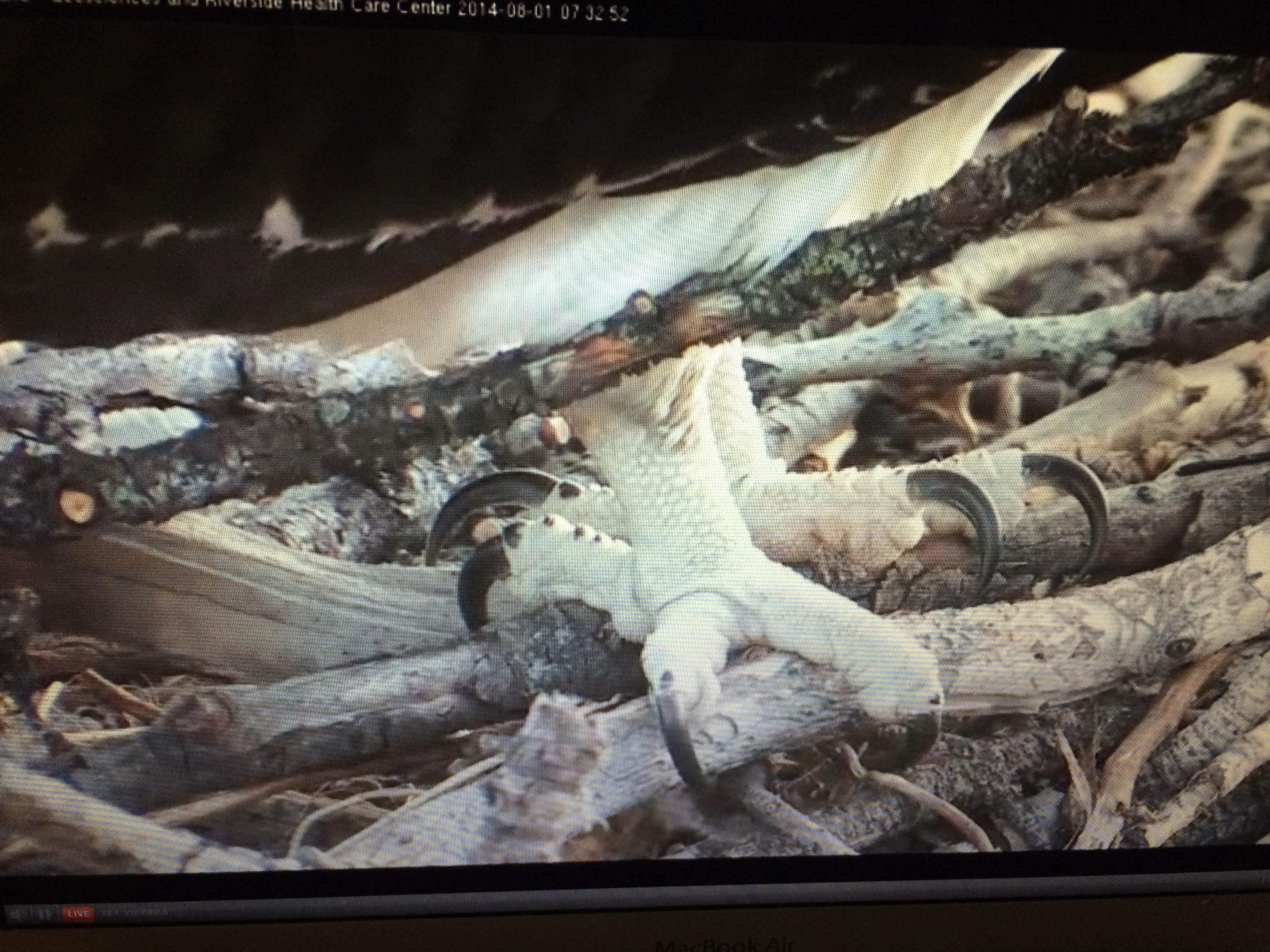
Through the cam, we are able to watch as huge sticks are brought to the nest atop a platform located at the mouth of Hellgate Canyon near the Clark Fork River in Missoula, Montana. They somehow manage to build those sticks into a nice nest with a cup in the center where the eggs will be deposited. Stanley is very proficient at supplying Iris with great sticks, both large and small. Many times he weaves them into the nest and later we may see Iris doing some “redecorating” as if she wasn’t quite satisfied with his building skills.

IMG_2761
Osprey Chick – 2014

The eggs are laid and through the cams we anxiously wait to see just how many there will be this year. One, two, then three. As she tends to her important duties, Stanley proves consistently what a great provider he is. Time and time again he dives into the river, catches huge fish, removes the head and brings the entire fish to the nest for Iris. But, he goes one step further. I have actually seen him tear small pieces of flesh from the fish and tenderly feed them to Iris. There relationship is solid and they will remain with each other until one of them dies at which time the remaining one will seek another mate for life. The drive to preserve the species is quite strong.

Iris and Stanley both tenderly care for their eggs keeping them warm, protecting them from the elements. I have seen her spread her wings and act as a “Mombrella” to shade her chicks from the sun or rain. This is exactly what she did one day when a freak hail storm began pummeling the nest. She and Stanley spread their wings in a futile attempt to protect their eggs. So close to pipping when disaster struck. All of the eggs sustained damage even though both parents valiantly fought to protect them. Faced with this tremendous loss, both parents instinctively knew it was too late to begin again. They must wait for next Spring. Hopefully next year they will meet with success and their offspring will fledge from the nest and begin their own journeys.

My heart was so heavy the day I watched the video and read about their loss. I shed tears and the sadness followed me for several days thereafter. The drama of watching them build, endure, suffer loss and carry on is a lesson from Mother Nature to us all. Never give up, keep trying and success will eventually be yours.

Happy bird searching!!!IMG_2786

Photos grabbed from live bird cams courtesy of Cornell University.


The Rookery


IMG_1562
Roseate Spoonbill with Chick – Smith Oaks Bird Sanctuary
IMG_0960
The Rookery

In the Spring the cacophony of sound that surrounds the High Island Rookery can be deafening. Just what is a Rookery? Think of it as a giant baby nursery for several species of birds. Cormorants, Roseate Spoonbills, Great Egrets, Snowy Egrets and Herons arrive each Spring from their wintering grounds in Central and South America. Driven by instinct to procreate, they begin the arduous task of building nests, laying their eggs and then waiting for the pipping to begin. As each new chick emerges from its shell and makes its way into the world, the parents begin hunting for food to feed the hungry begging mouths of their offspring. Featherless, flightless and totally dependent on Mom and Dad, they must eat, grow feathers and practice all the skills that will enable them to successfully fledge at the proper moment in time.

One of my favorite rookeries is located on High Island. High Island is so named because it is the highest point of land on the Bolivar Peninsula, a small barrier beach that borders the Gulf of Mexico. A huge salt dome rose from the earth to form this piece of land that is approximately 38 feet above sea level. A predator-free island is located in Clay Bottom Pond, which was originally created to help supply drinking water for the employees of the growing oil industry. Surrounded by marshy water, the birds find it to be an ideal location for building nests and raising their young. See more history of High Island at: http://www.houstonaudubon.org/default.aspx/MenuItemID/757/MenuGroup/High+Island.htm

IMG_5143
Great Egret Incubating Eggs

Once sites are selected in the trees and large shrubs on the island, the building begins. Each limb of the available trees is laden with nests, stacked one above the other. Picture a condominium for birds. Some wooden platforms have been built that are several layers high which are probably considered prime real estate in the bird world. (Take a moment here and think about where you might want your nest to be in a tree….on the top with blue sky above or on the bottom where bird droppings might fall upon you). The birds begin gathering sticks and fashioning their nests to their satisfaction.There is much stick stealing that occurs on the island as nest-building season begins. It appears frantic as everyone tries to “keep up with the Jones” in building a bigger and better nest. Once nest-building is completed, everyone gets busy laying their eggs followed by the boring job of incubation. They must be kept warm and turned periodically to keep the developing embryo from adhering to the inside of the egg-shell. It is an important job and all birds seem to instinctively know how to do these tasks. And of course, if one parent leaves the nest to forage for food, then the other parent usually steps in to take on the incubating duties. The ultimate goal is one that carries a heavy burden of responsibility….survival of their species on our planet.

IMG_1542
Juvenile “Teenage” Egrets

The spectacular show bursts into full glory when the eggs start hatching. The noise factor increases with the added voices of babies begging for food. Incoming and outgoing flights of the parents increase as they continually are fishing for food to fill their offspring’s bellies. As the young mature and their feathers begin to appear, they are unruly teenagers and some of their spiky feathers give new meaning to the term “bad hair day”.  As they grow, food demands increase and the babies begin doing other things like inspecting their environment, spying on other birds and nests, pulling at small sticks and “flappercizing”. They practice flapping their wings and working on building the muscles in preparation for their first flight. A fall from the nest or an aborted first flight that lands a chick in the water surrounding the Rookery could mean death since there are alligators lurking just waiting for a tasty appetizer to come close to their waiting jaws.

IMG_0977
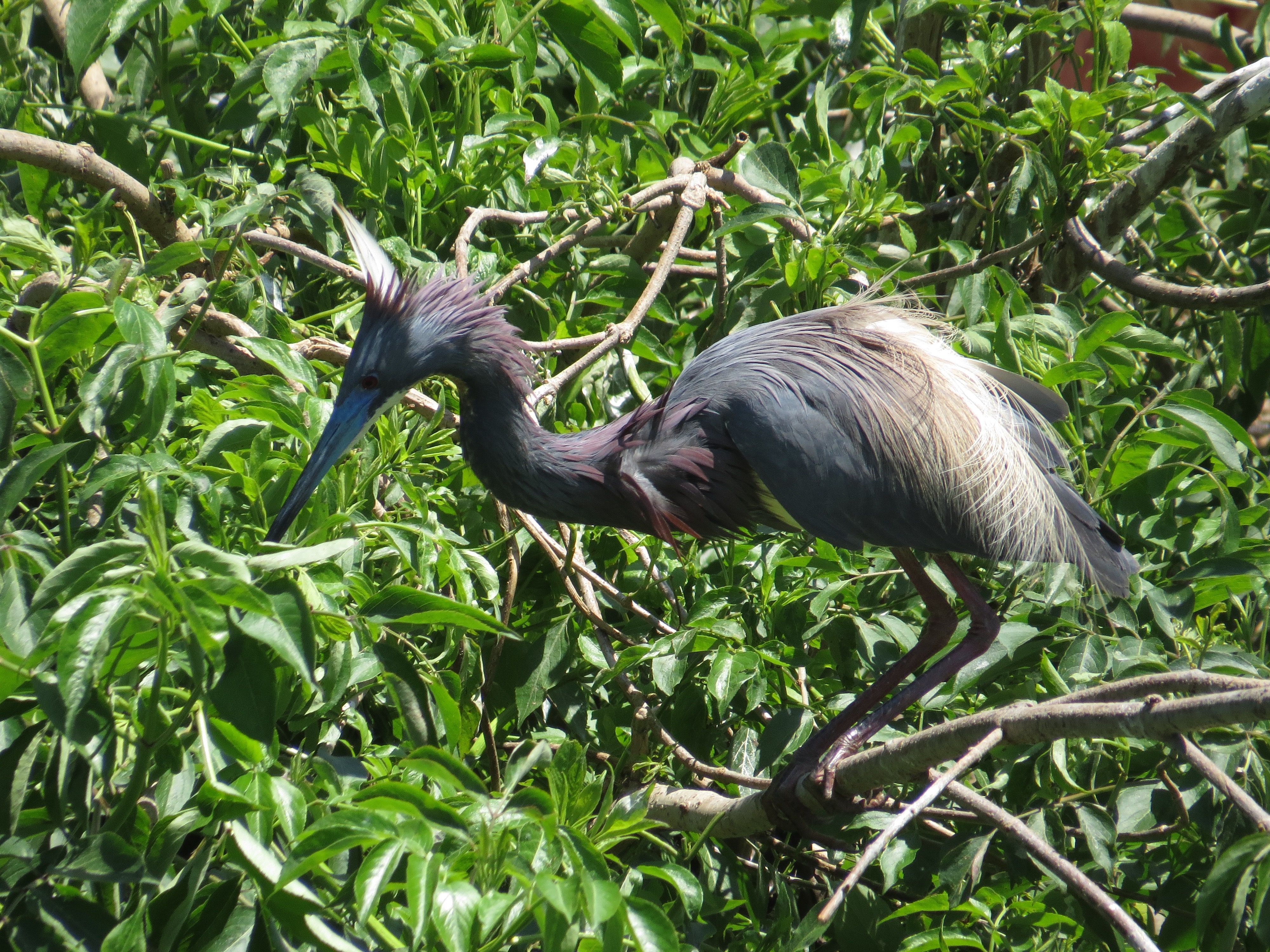
Tri-Colored Heron

I have stood for hours watching the activity surrounding the Rookery. I have snapped thousands of pictures trying to capture that which cannot be captured. It simply must be witnessed to be believed. So if you happen to get the opportunity to visit High Island,Texas, be sure to make time to visit the Smith Oaks Bird Sanctuary. I promise you won’t be disappointed.

No happy bird searching here. If you visit the Rookery, it’s Happy Bird Watching guaranteed!

PS: Don’t forget your bug spray!!!!

Ballerino Extraordinaire of the Bird World – December 7, 2015

IMG_4505
Reddish Egret – Galveston East Jetty – Personal Photo GKennedy

Today BFF Linda and I traveled South to meet up with some dear friends to enjoy the camaraderie of lunch, laughter and a few games of cards in a Denny’s restaurant. As we traveled South towards Corpus Christi, Linda and I reminisced about one of the most beautiful experiences we were privileged to witness at a Rio Grande Valley Birding Festival event a few years ago.

As usual, we were up early, traveling in the dark to the convention center in Harlingen to board our bus for our planned outing to some mudflats located behind the South Padre Island Convention Center. We are never guaranteed bird sightings. Many times it simply is the luck of the draw. Today we hit the jackpot!

We already had an extremely full day of shore bird identification. It was a very, very cold and windy day and standing in the biting wind being buffeted on all sides while trying to identify some birds with cold binoculars can be exhausting. When we arrived at the mudflats, we were immediately captivated by two Tri-Colored Herons playfully challenging each other. They ran, jumped and skittered across the mudflats in a choreographed display that can only be called magical. We watched these two for quite some time and soon they were joined by one of my favorite birds, a Reddish Egret. He was regal in his beautiful rust colored feathers that were blowing gracefully in the breeze created by his cavorting. He pranced, skipped, hopped and darted to and fro, changing directions effortlessly. If birds could be ballerinas, then this bird was definitely the premier danseur noble.

A few years ago, I had the privilege of attending a ballet performed by the Russian Ballet troupe in the Hermitage Theatre in St. Petersburg, Russia.  Because of traffic, my friend and I had arrived with our group a little late and we rushed up the stairs to the theatre afraid we would not be able to get a good seat. We were delightfully surprised to find ourselves being ushered to the front row of the theatre directly in front of the orchestra pit. We breathlessly took our seats as the curtain rose and the orchestra struck the first chords of Swan Lake. I knew at that moment that what I was about to witness was going to be one of the best and most touching memories of my life. I sat captivated for the entire ballet, tears streamed unchecked over my face just from the sheer beauty of what I was seeing, the emotion that I was experiencing. As the story unfolded and I watched the rib cages of the swans as they heaved in and out, I found myself holding my breath. My heart skipped beats as the raw emotion of such beauty washed over me. At that moment, the ballerinas were the swans and the power of their tremendous artistry and the timeless majesty of the music was unsurpassed by anything I had ever seen, heard or experienced.

That cold winter day on the mudflats of South Padre Island in South Texas, what I witnessed approached the indescribable beauty of that Russian ballet. It was spectacular. It was magical. It was beauty as only nature can provide at moments when we are least expecting it. I was captivated and in awe of nature’s premier danseur noble, the Reddish Egret.

Happy bird searching!


BFB Defined

What is BFB? Birding from Balcony is another of my favorite ways to find enjoyment in birding.

IMG_4828
Osprey – Joe”s Crab Shack , Lady Bird Lake 2015

I live on the 10th floor of a building that overlooks Town Lake (AKA Lady Bird Lake) and each morning presents another opportunity to use my spotting scope to check out which birding friends and visitors might be perching, wading or swimming on the lake. The year round residents are Great Blue Herons, Great Egrets, Snowy Egrets, Mallards, Green Herons, Ospreys, Kingfishers and a plethora of others. And most recently, the cormorants and bufflehead ducks have returned.

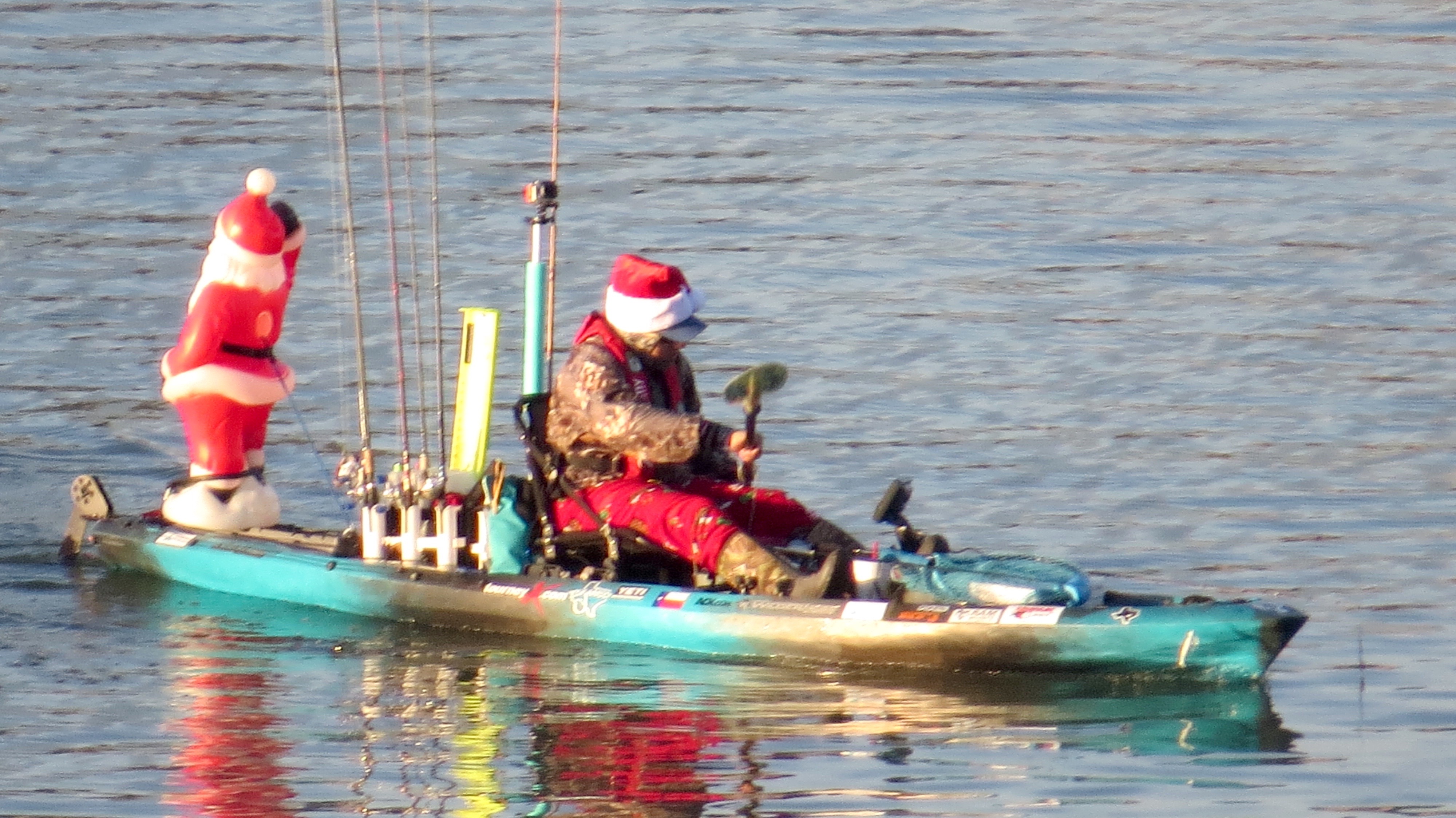
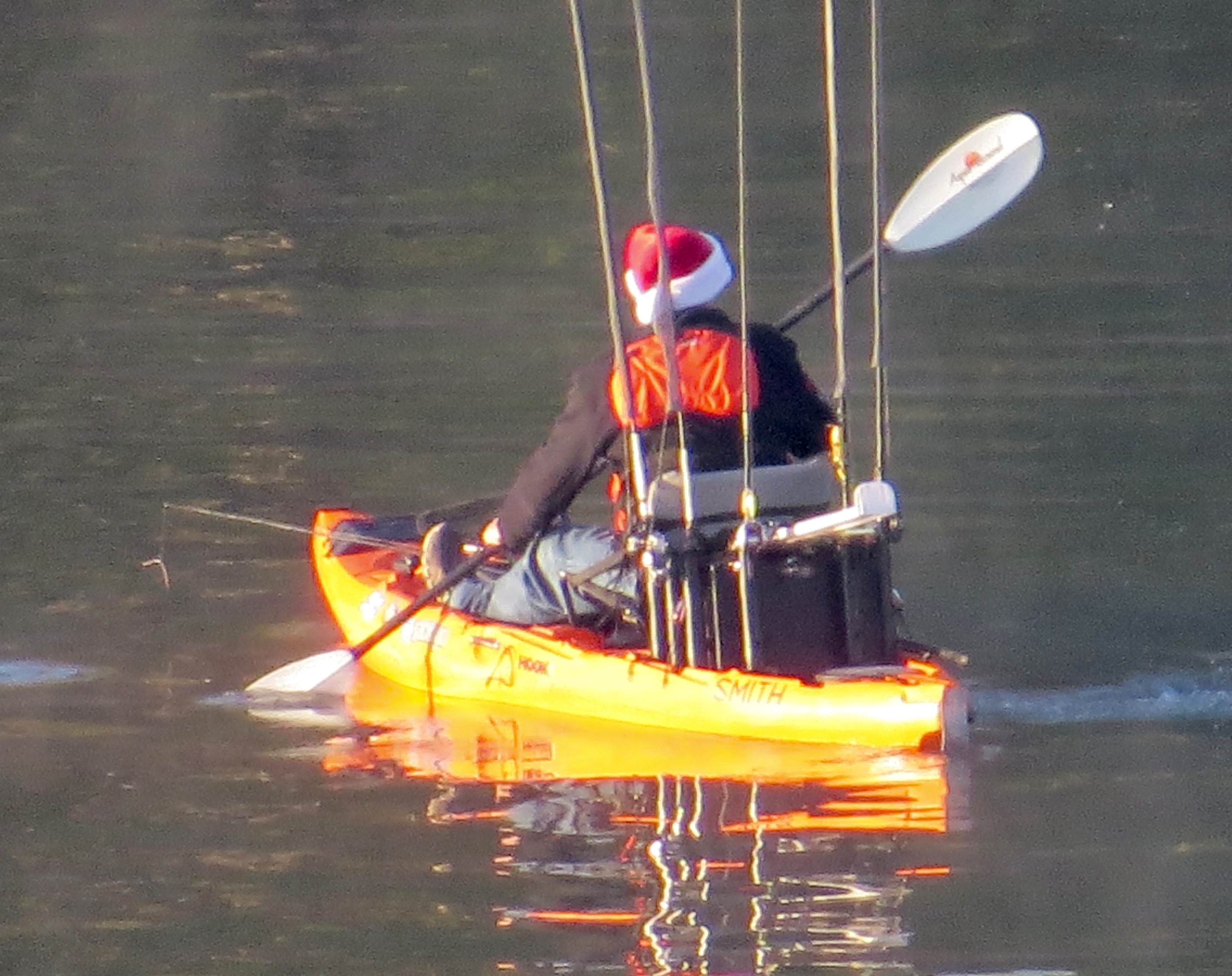
But this morning i stepped onto the balcony with my spotting scope and witnessed a truly uplifting sight. There were a few strange birds on the water. They floated and paddled. Their plumage was red, shiny and filled with beauty. But what should appear before my eyes but three small flat boats decked with tinsel. And low and behold I spied at least three Santas taking a day off from their toy workshops to do a little fishing. A Christmas tree adorned one on the aft part of the boat and a plastic Santa stood watch on another. I ran for my camera to capture the moment. And I and my friend Linda stood pondering with wonder and amazement at how three fishermen decided to take the time to decorate their boats and themselves before getting up early on a crisp winter morning to go forth and bring a smile to the faces of anyone who was fortunate enough to observe these three kings.

What a gift!  We smiled, we laughed and we posted those photos on Facebook so others might experience our special moment. To those hardy fishermen….I thank you for having such pure spirits and sharing the true meaning of Christmas…giving to others and filling their hearts with joy and wonderment. I am blessed to have witnessed it.

Happy bird searching!

IMG_6713

IMG_6719

IMG_6714


Hornsby Bend – December 4, 2015

A clear crisp,blue skies day In Austin Texas, the perfect day for a short trip out to Hornsby Bend to check out which birds may have stopped by for a rest while on their migratory trip South.

Hornsby Bend is a 1200 acre site situated on the Colorado River and it did not have its beginnings as a bird sanctuary, but instead was built in the 1950’s as the main water treatment facility for Austin. It has become a national recognized biosolids recycling center and is expertly managed. Here the sewage from Austin is transformed back into potable water and returned to the Colorado River. Here sludge is transformed into Dillo Dirt which is sold to gardeners throughout the area.

Hornsby Bend has been a birding hotspot for over 50 years now. The story of how the first birders found the ponds goes something like this…A young birder named G. Frank ‘Pancho’ Oatman was visiting relatives in the area over the Thanksgiving holidays when he spotted some ducks flying across the Colorado River. He began exploring and found the sewage facilities at Hornsby Bend. He spotted several different species and began spreading the word to other birders who flocked (pun intended) to the area to enjoy looking at multiple species that had never before been seen in the Austin area. Over the years, thousands of birders have visited this facility to enjoy the many birds as they drop in for a visit and rest on their migratory travels.

Check out more about Hornsby Bend at http://www.hornsbybend.org

Today I visited Hornsby with my BFF Linda who is in Austin visiting for a few days. We spotted Killdeer, starlings, mockingbirds, Gadwalls and a large flock of Northern Shovelers. My friend on the right was nowhere to be seen today however. No matter, I am sure I’ll catch him on the back side.

Happy bird searching.