A clear crisp,blue skies day In Austin Texas, the perfect day for a short trip out to Hornsby Bend to check out which birds may have stopped by for a rest while on their migratory trip South.
Hornsby Bend is a 1200 acre site situated on the Colorado River and it did not have its beginnings as a bird sanctuary, but instead was built in the 1950’s as the main water treatment facility for Austin. It has become a national recognized biosolids recycling center and is expertly managed. Here the sewage from Austin is transformed back into potable water and returned to the Colorado River. Here sludge is transformed into Dillo Dirt which is sold to gardeners throughout the area.
Hornsby Bend has been a birding hotspot for over 50 years now. The story of how the first birders found the ponds goes something like this…A young birder named G. Frank ‘Pancho’ Oatman was visiting relatives in the area over the Thanksgiving holidays when he spotted some ducks flying across the Colorado River. He began exploring and found the sewage facilities at Hornsby Bend. He spotted several different species and began spreading the word to other birders who flocked (pun intended) to the area to enjoy looking at multiple species that had never before been seen in the Austin area. Over the years, thousands of birders have visited this facility to enjoy the many birds as they drop in for a visit and rest on their migratory travels.
Check out more about Hornsby Bend at http://www.hornsbybend.org
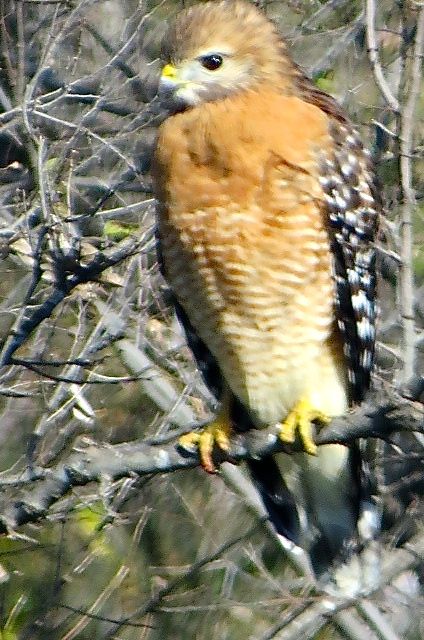
Today I visited Hornsby with my BFF Linda who is in Austin visiting for a few days. We spotted Killdeer, starlings, mockingbirds, Gadwalls and a large flock of Northern Shovelers. My friend on the right was nowhere to be seen today however. No matter, I am sure I’ll catch him on the back side.
A few years ago I discovered Cornell University’s live bird cams. I became obsessed with watching Big Red and Ezra as they prepared their nest, nurtured the eggs in all kinds of weather, kept their young well fed and finally helped them to fledge to continue their education free in the wild. It was so beautiful and tender and mind blowing to watch this family survive and go about their activities of daily living. There was much drama throughout the months that spanned egg laying to fledge time.
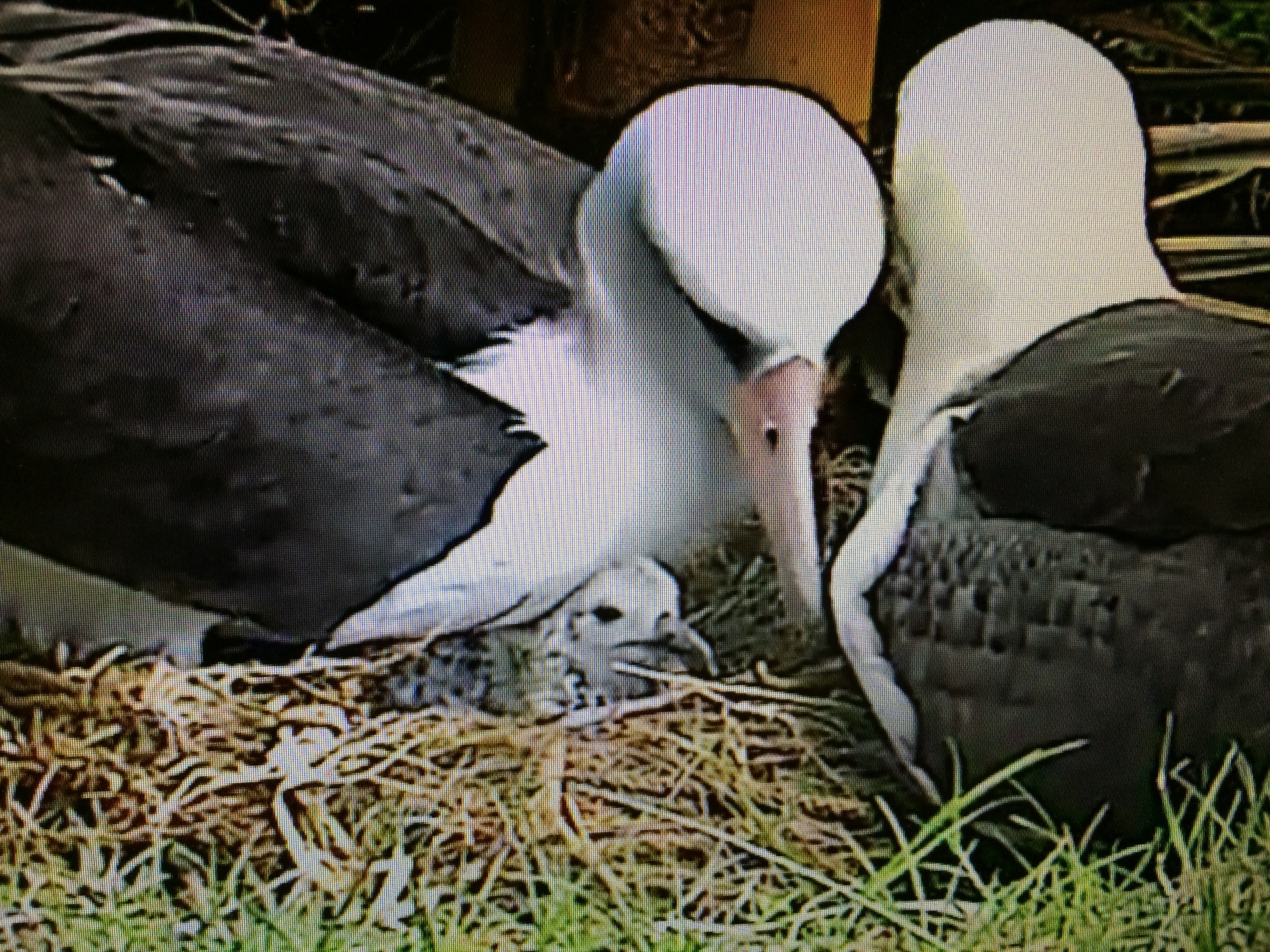
I traveled via bird cam to Hawaii where I watched a Laysan Albatross hatch and survive to spread his wings and soar for the first time out over the Pacific six months later. There was a beautiful video of Spike (my nickname for him) as he took to his wings for the first time. I learn so very much from the postings of expert birders on these cam sites. A Laysan Albatross may be hatched in January and his parents have to care for him until July before he can fly away on his own to spend a couple of years riding the thermal waves above the ocean. Doesn’t sound too difficult until we learn that the preferred food of the Albatross is squid. To get this squid food, his parents fly as far as Japan or Alaska, gorge themselves, fly back to their chick and regurgitate the rich liquid to their offspring’s begging mouth. And they do this over and over and over again.
I’ve enjoyed a backyard cam in Ontario Canada in the dead of winter and the feeders on Sapsucker Woods Pond in Ithaca, New York. Each feeder explodes with different species of birds and can be a source of great entertainment for birdwatchers particularly if they are physically handicapped and are unable to trapse around in the bushes in search of new birds.
So, here is my conundrum….Many birders keep a Life List of all the birds they have seen or identified. We work hard at adding new birds to our Life List. It is an exciting endeavor filled with much anticipation. So,if I am watching a bird cam in some far away place and I see a species of bird that is new to me, is it politically correct for me to be able to add it to my Life List? I ask this question sometimes to different birders and have received all different kinds of replies. The staunch dyed-in-the-wool birders say “No way…cam birds aren’t legal to count. You have to go out looking for them.” The way I interpret this response is…” I have spent a lot of time and money doing this hobby the hard way and if I suffered then so should you”. This mindset is similar to the way some experienced nurses will treat new graduates…I suffered and you should also. However, many times the response is “I’m not sure” or “I have never thought about that” but when I back my choice with justifiable reasons FOR bird cams being a legitimate means of adding to a birding Life List, often I am able to swing them to my way of thinking.
Since I am a nurse, I have spent a career dealing with many patients with impaired mobility. These people, many times through no fault of their own, can’t physically get out and about to pursue a hobby such as bird watching. I strongly believe that in this advanced age of technology, why not take advantage of the live bird cams to experience the joy of nature, observe and learn about the many different species and by doing so expand our world. Why not let it count? I will always resoundingly say “Yes” since I don’t believe that one has to be physically present to experience the thrill of spotting your very first Pileated Woodpecker. I am forever thankful for the technology that has enabled me to see many species and their habits up close and personal when otherwise it might not have been possible.
And again I say….Why Not?
Happy bird searching in person or via cam. In my world it counts!!!
I reflect sometimes on how I came to be interested in birding. Looking back on my life, I have always had a love for birds….a pet canary given to me by my Father and a barrage of parakeets who amazed me with their intelligence. And then as an adult I had a Yellow Nape Amazon parrot named Kazoo for about 15 years. But just how did my interest in birdwatching begin?
Great Blue Heron – Galveston Island December 2014
About four years ago, I was in Harlingen visiting my friend Linda who had escaped Michigan’s cold weather to winter in that area. The house she and her husband had leased was located on the Colorado River where it dumps into the Laguna Madre. We were sitting on the back porch enjoying the beautiful sunshine and the view across the river. Birds flitted here and there, occasional patrols of Brown Pelicans skimmed over the river’s surface, when we spotted something sitting in a large tree across the river. It was very still, appeared to be approximately 5 feet tall, had very long flowing feathers and we tried to determine if we were seeing a part of the tree or if this might be some kind of giant bird. After much observation through binoculars, we determined that it was a giant bird and we named him Big Bird. At that time we didn’t know what his true name was and thus began our journey into the birdwatching world. We finally realized that what we saw was a Great Blue Heron in full breeding plumage. He was a magnificent specimen and in future years we always were checking to make sure that “Big Bird” was still roosting across the river. We also noticed large birds sitting in the trees lining the riverbank during the day. All we could see were semi-large birds that were black with white bellies. We named these “penguin birds” since that was all we could see of them at that time. Quickly we learned that our penguin birds were black-crowned night herons.
Our learning curve rose rapidly….With books, phone apps and both of us glued to our binoculars, we quickly grew in our identifying skills. A new hobby had been embraced and a new adventure begun with both of us experiencing tremendous joy in sharing our new-found love of bird watching.
When my BFF Linda and I attended our very first Rio Grande Valley Birding Festival in Harlingen, we had an experience that was very frustrating to “new birders” .
We were up early, so excited about this new hobby we had discovered, leaving the house while still dark, to drive 20+ miles to the convention center to board the bus for our very first birding adventure. We packed snacks, water and were draped in the paraphernalia that we felt was necessary for us to have on our first outing….cameras, binoculars, birding vest, birding books….a very long list of “things”.
We followed along behind our birding expert guides, listening intently to their every word and quickly scanning the bushes, trees and skies for the birds that they spotted or heard. Frequently we were unable to understand the names of some of the birds they were sighting. One particular experience led us to loudly complain to our leaders. Everyone kept shouting “there’s a Sharpie”. A what???? Excited isn’t quite the word to describe the atmosphere surrounding this “Sharpie”. Linda and I were frantically checking the index in our birding books trying to find a “Sharpie”. When we finally asked our guides just what a “Sharpie” was, they said “Oh, that’s a Sharp-shinned Hawk. We just call them Sharpies”
We exploded with….”How in the world is a new birder suppose to know this?” The lesson learned for future trips that may include new birders….Avoid nicknames, use the correct name of the bird and then follow with what their nickname might be!

 on their migratory travels.

 ginnybirdbeakspeak