Beach Therapy

IMG_0439
Beach Art

Pelicans have always been of special interest to me. It might be because during my childhood, the pelicans were the birds that I most remembered seeing on our family day trips to Galveston. I have wonderful memories of those day trips. My Mother would rise early and begin frying chicken, making potato salad, bread and butter sandwiches and brownies to take with us for our picnic lunch. In the car my mouth was watering the entire trip from the enticing aromas drifting out of that basket.

Once we crossed the causeway bridge onto the island and made our way to the beach, my Father would rig a tarp from the side of our car  to give us some shade from the intense sun. The ocean breezes cooled our skin making us unaware of the sunburn we were incurring. And I doubt seriously that we knew about sunblock in those days.

I spent much of my time chasing the little clams that washed onto shore and instantly buried themselves in the wet sand, splashing in the shallow waves and building sand castles. Those visits to the beach are some of my most precious memories.

IMG_4222
What’s for Breakfast? Brown Pelican hanging out at the back door of the fish market

As an adult, I still seek the beach on a regular basis to recharge my soul. And now, my beach combing passion has expanded to bird watching as well. There are many shorebirds that I enjoy watching but the Pelicans are part of my childhood memories so that makes them special. And as an adult I have now learned the differences between the Brown Pelicans and the American White Pelicans.
IMG_0477
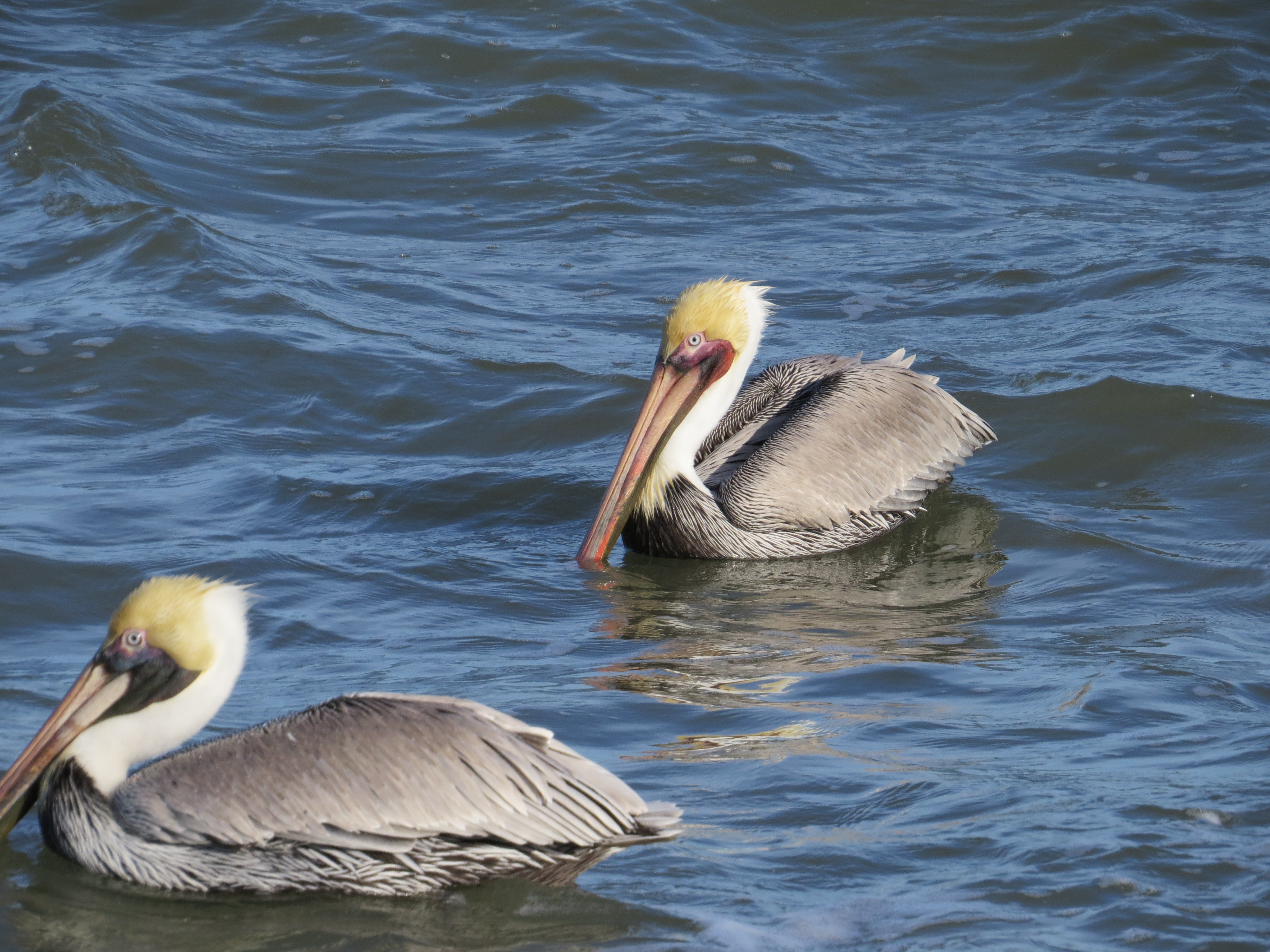
Brown Pelicans

Brown Pelicans are plunge divers. They cruise low over the ocean and dive straight into the water when they spy a fish. They are frequently seen flying in a line over the beach and shoreline. When DDT was used as a herbicide, the run off into the ocean contributed greatly to their demise. Brown Pelicans use their feet to help incubate their eggs and the DDT caused the shells to be too thin and fragile which lead to them breaking before hatching . Their numbers dropped dramatically which placed brown pelicans on the endangered species list. Thankfully, when DDT was banned, they rebounded and are once again patrolling the skies on the Gulf Coast.

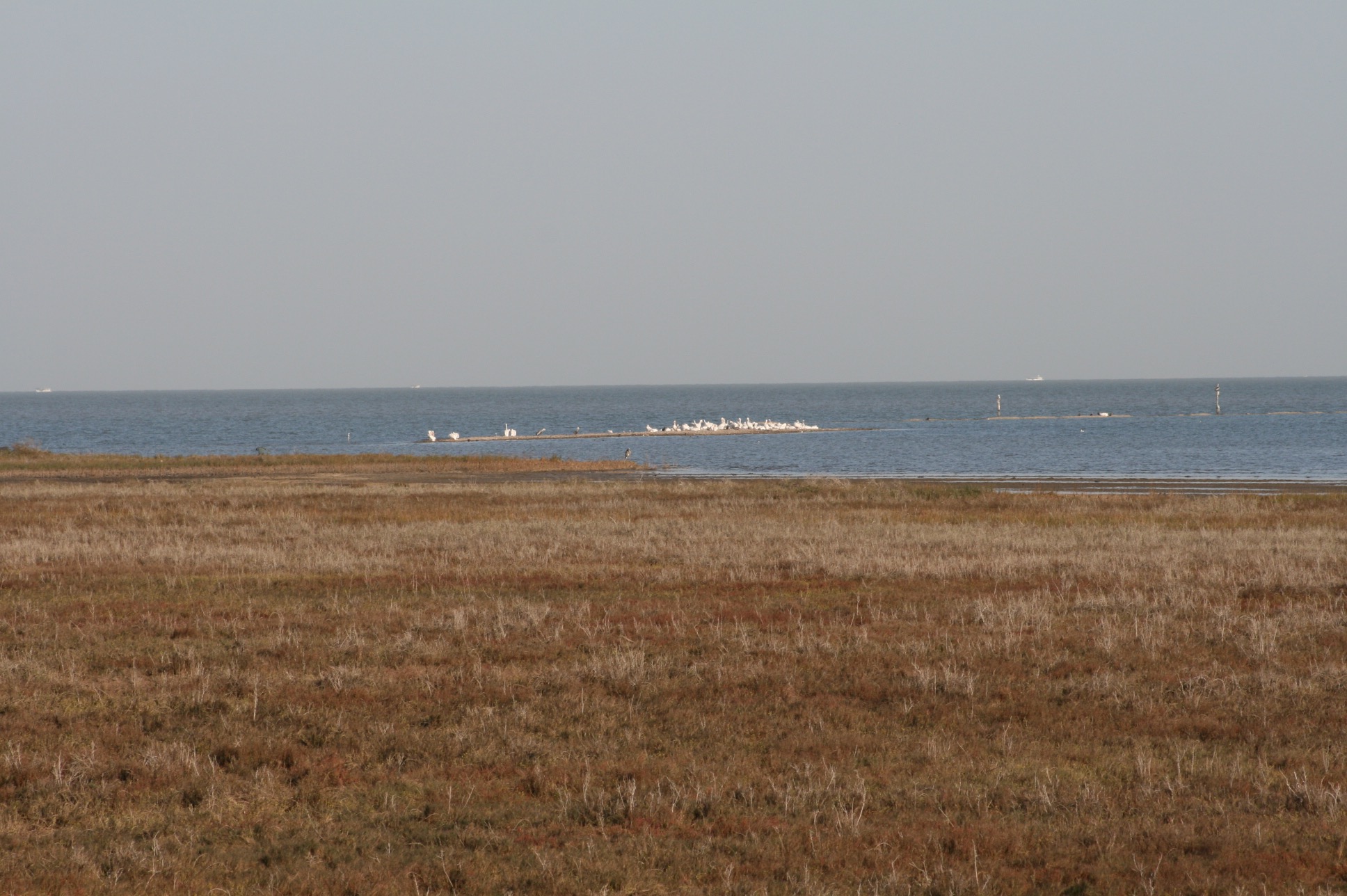
American White Pelicans work cooperatively with each other and while swimming on the water they “herd”  the fish and then feed. They do not plunge dive. They are one of the largest sea birds and may weight as much as 30 pounds and have a wingspan of nine feet or more.

IMG_0495
American White Pelican
IMG_7874
American White Pelicans hanging out at the bar

Aptly enough a group of pelicans is known as a squadron of pelicans. It definitely is a sight to see if in the Galveston area. The Brown Pelicans are always on beach patrol and the American White Pelicans fly in groups but are often seen bobbing together in the water or hanging out on a sand bar. Both are magnificent to behold.

Happy bird searching!!!


Beaks and Feet – Harris’s Hawk

IMG_2564
Harris’s Hawk

One of the main distinguishing features of any bird is its beak. Of course, beaks come in all sizes and shapes and are a great tool for helping us to identify what kind of bird we are seeing. Many times beaks tell us where a bird lives and what it eats.

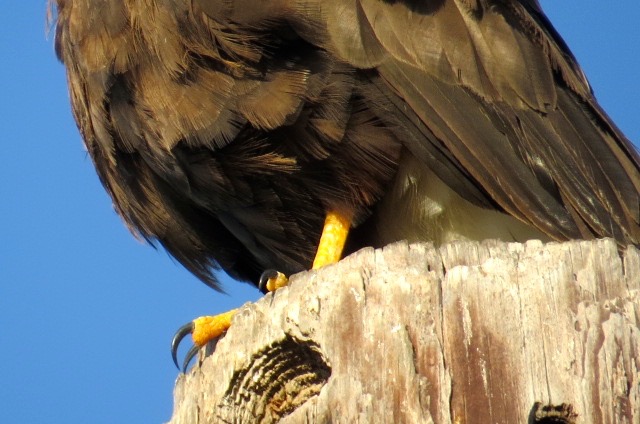
The other very easily identifiable feature of any bird is its feet. Feet may also tell us where a bird lives. Different species have adapted physical characteristics that enable them to make the most of their environment. Let’s look at an obvious one.

A hawk is a hunter. All raptors are hunters, but today’s focus is Harris’s Hawk. They are known to be cooperative hunters which means they will hunt with other hawks in order to increase the odds of having a successful IMG_3491outcome….obtaining food. In the case of hawks this may be squirrels, other birds (frequently caught on the wing), chipmunks, snakes, mice, ducks, lizards, rabbits and probably a small dog or cat if the opportunity presented itself.

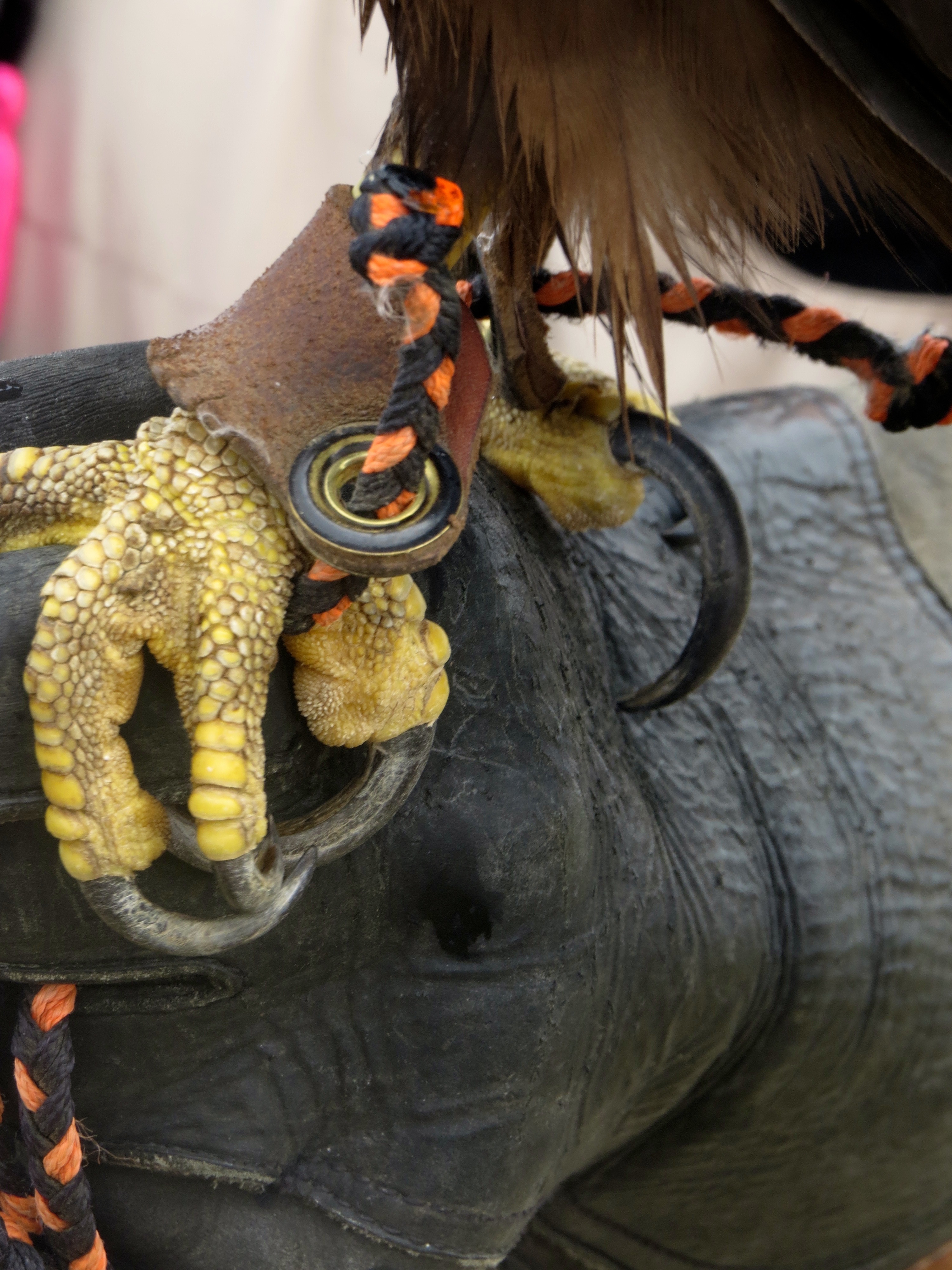
They have powerful talons with curving claws and when they spot their prey and begin their feet-first diving descent to capture it, the talons lock onto the prey and tighten much like a zip tie. So a hawk’s feet are designed to catch their food. Struggle as they may, the seized prey very rarely can escape the powerful grasp of those talons.

Their beaks are large, powerful and hooked which enables a hawk to rip and shred the flesh of the unfortunate small mammal that will be breakfast or dinner. Using this bill is a skill that is taught to their young. At first, chicks are fed by their parents. They rip the flesh into tiny pieces and gently place it in the mouths of their young. As the babies grow, the parents may drop a dead chipmunk into the nest and the babies begin pecking and pulling at it. This is a prelude to them actually being able to tear the flesh for themselves. The babies have to learn how to “unzip” the mammal to get past the fur to the flesh underneath.  Teenage chicks may practice pouncing on dead prey left in the nest. Once they fledge, these are all skills they will need if they are to survive in the wild.

I never really thought much about how birds survive after they leave the nest. I always assumed that once they flew off that they were on their own instinctively knowing how to get food and eat it. Not so! In the Raptor Family, the adolescent fledglings may be fed by their parents for 4-6 weeks or more after fledging. The parents encourage them to try to catch food, but if they fail or cannot complete the kill, then Mom or Dad will step in and complete the process or drop food for them. The fledglings are very vocal and cry loudly begging for food if they are unsuccessful. The parents are always encouraging them to try again, allowing them to beg for some time before intervening hoping that hunger will be the driving force behind their ultimate hunting success. Practice makes perfect.

IMG_2481
Harris’s Hawks are popular with falconers.

Just as our children may need help after they “leave the nest”, juvenile birds also need help from their parents. My foray into the birding world has educated me greatly on bird behavior and I must admit that I have been totally awed by the majesty and wonder of it all.

Happy bird searching!!!


The Boardwalk

IMG_6804
The Boardwalk on Lady Bird Lake

The City of Austin is lucky to have a wonderful addition to its urban water resources called Town Lake which not too long ago was renamed Lady Bird Lake. The trail along this lake was recently enhanced with the addition of the Boardwalk. Walking around the lake using the trails and boardwalk opens up a whole new world of nature and birding opportunities. Each season presents a different picturesque landscape. The beauty of it all can be breathtaking. Check it out!!!

IMG_2585
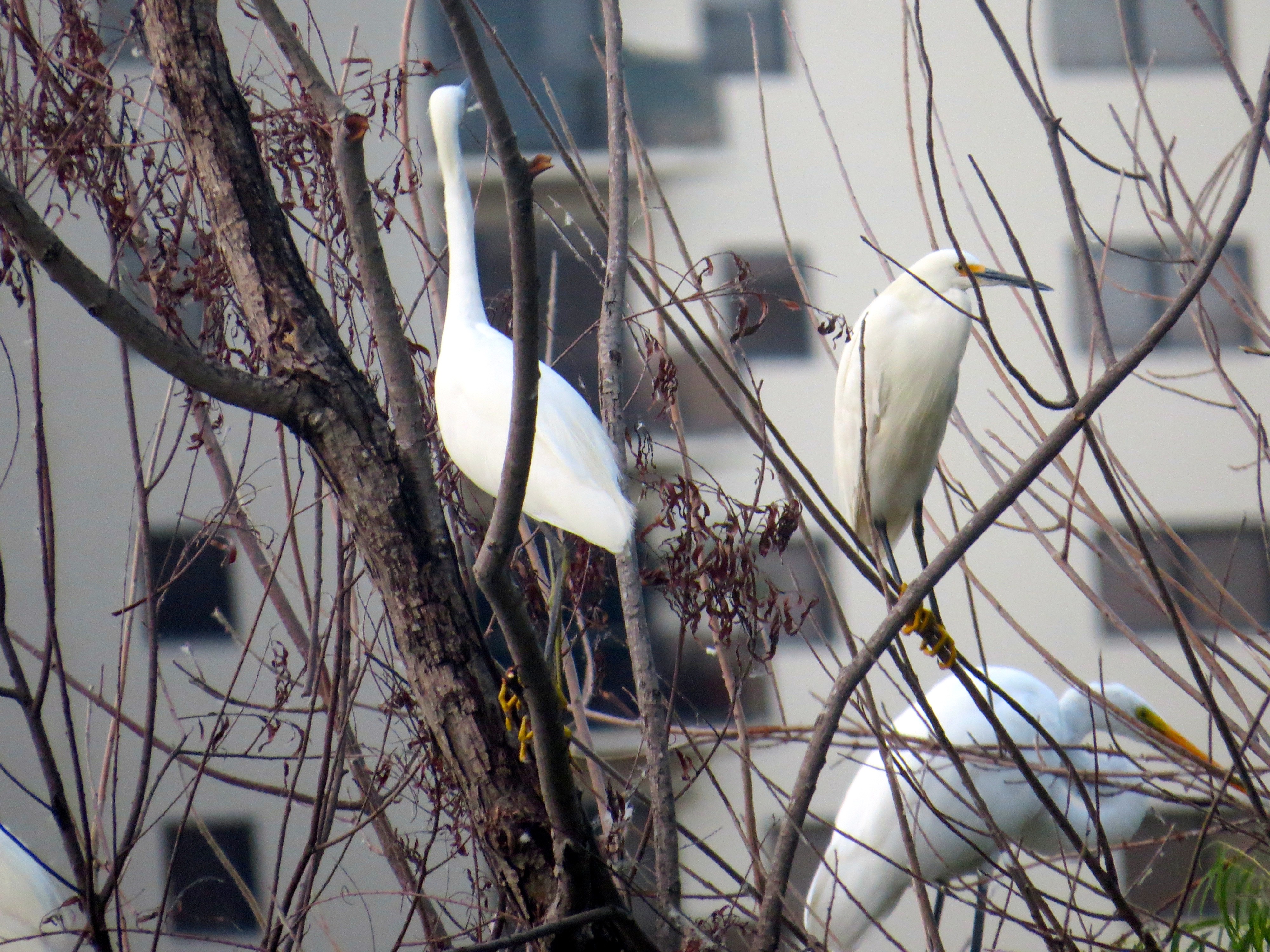
Snowy Egrets settling in for the night

There is much flora and fauna along the way and I never tire of walking the trails and Boardwalk to see what new wonders might be there. On one occasion from my balcony, I observed several dozen snowy egrets flying in at dusk to land in a particular tree on the south shore near Joe’s Crab Shack. I was intrigued but did not travel to investigate. The next evening when I witnessed the same thing happening, I jumped in my car, drove to Joe’s Crab Shack and rushed down the Boardwalk to see what was happening. For a reason unknown to me, for three or four days these birds had chosen this tree for their nighttime roosting site. My camera was clicking away capturing that moment.

IMG_4725
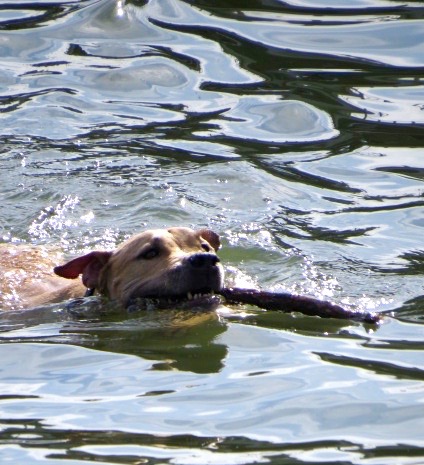
Lab & Water & Stick = FUN!!!!

Every bush, tree, shoreline nook and cranny might have a bird stealthily hunting their next meal. A plant of yesterdays walk may have burst into bloom overnight. An unusual bird visitor may have stopped by for a visit. Or a yellow Lab may be enjoying a swim playing a game of water fetch.

It is always entertaining and a beautiful bird, leaf, flower or unexpected diversion may appear at any moment to give us lasting memories of a delightful walk on a beautiful trail in a magnificent diverse city. Enjoy Austin!

Happy bird searching and Austin exploring!

IMG_4644
The colors of Fall


My Stork Encounter – September 29, 2013


IMG_2917.JPG
Wares at Warrenton

While visiting my sister at her ranch in Burton, Texas, I had a very special encounter with a clatter of storks. I was visiting her for a twice yearly antique event being held in Round Top, Texas.  Every April and October, thousands of vendors from all over the United States set up shop along Highway 237 to hawk (pun intended!) their wares to thousands of shoppers who are seeking special treasures. It is hard to imagine the scope of this event for it encompasses many miles and must be seen to be believed. But trust me…anything and everything can be found here. Think the best ever garage sale in your entire life multiplied one hundred thousand times plus antiques thrown in the mix. We already had two full days of canvasing most of our favorite sites and were in her kitchen just enjoying a lazy Sunday morning with a steaming cup of coffee. I was in my robe and not really focused on birding at that particular moment. My attention was drawn to the kitchen windows by some huge birds flying in to settle on a stock pond in the pasture behind their house. They were big! So big that I instinctively knew this was a special moment. I jumped up and grabbed the binoculars that were on the window sill and at first thought they must be Whooping Cranes. I flew to the door and started walking barefoot very slowly towards the pond which was approximately a football field distance away. No shoes but thankfully my brother-in-laws pastures are pristine and free of burrs and weeds.  In my flapping robe, I am sure this “swoop of storks” probably viewed me as some giant bird flapping in the pasture. So here I was barefoot in my robe stalking some very large birds and trying to get close enough to memorize identifying marks and to observe their behavior.  Many times the behavior of a bird can help you in the identification process. But I digress.


IMG_2879.JPG
Santas Galore

These huge birds were wading on the edge of the stock pond with their beaks half submerged slowly opening and closing them. They had predominantly white bodies , a sliver of black along their wing edges and tail and their heads were dark grey, scaly looking and featherless. The bills were thick, long and curved downward. And did I mention they were HUGE!!!!! Wood Storks have the nickname of “Old Flinthead”, “Ironhead” and Preacherbird because of their featherless heads and tendency to stand around contemplating their environment after eating. And indeed when you look at them their heads look very prehistoric.

Another moment in my life that I was kicking myself since in my excitement I did not being a camera with me. So once again, I began the process of burning the image into my memory. I was able to get within 50 yards of them and I spent the next 30 minutes or so leaning against the post on a barbed wire fence just absorbing the sheer magic and beauty of that moment. It was a gift to watch them slowly move through the pond water seeking food and refreshment on their migratory journey. When they finally took off to resume their trip, I savored the beauty of their powerful wings lifting them upward into the sky. They were magnificent and I was blessed to have witnessed them up close and personal.

IMG_6822
Wood Stork Journal Entry

Iris and Stanley


IMG_2255
Stanley & Iris -2014

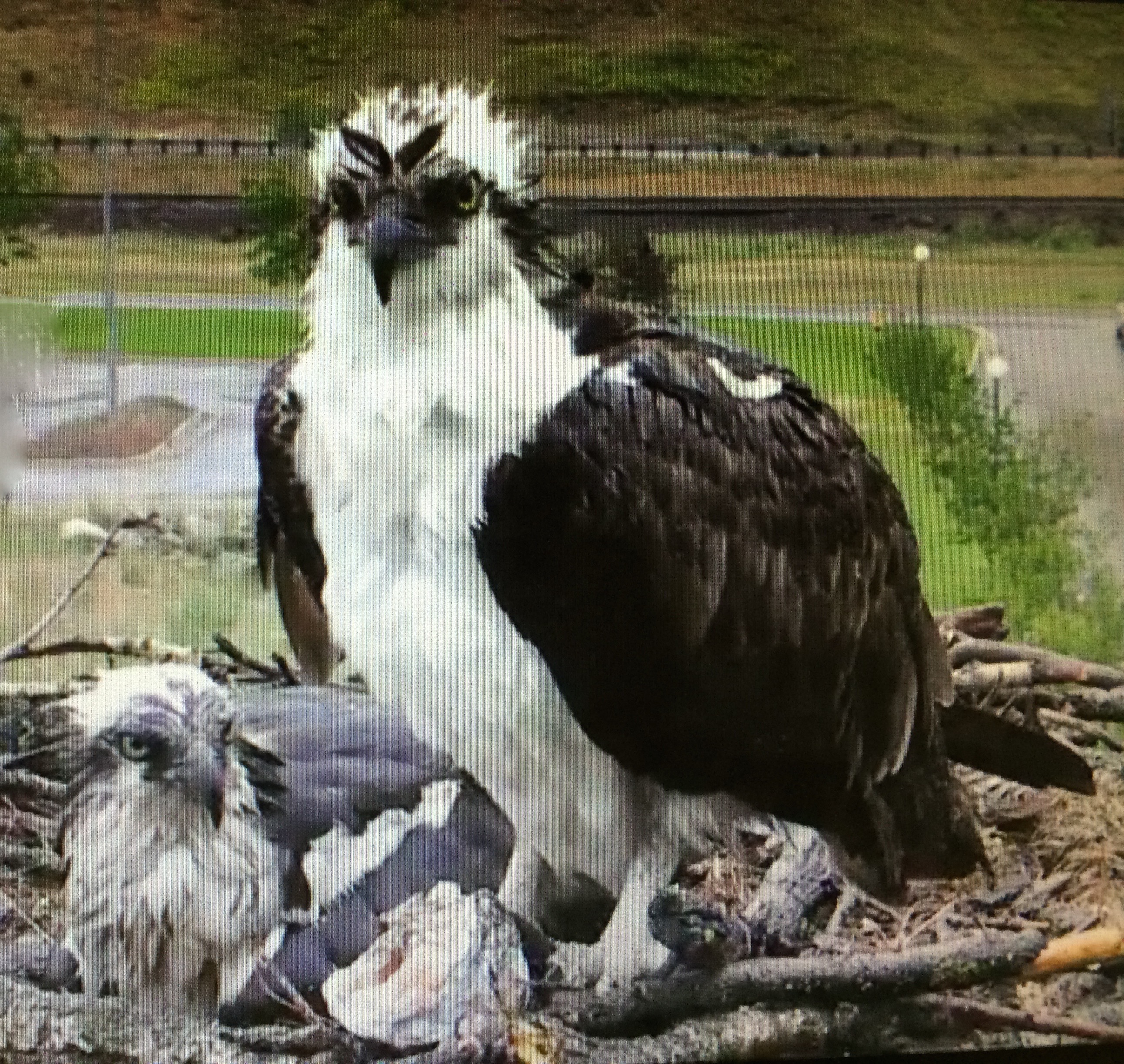
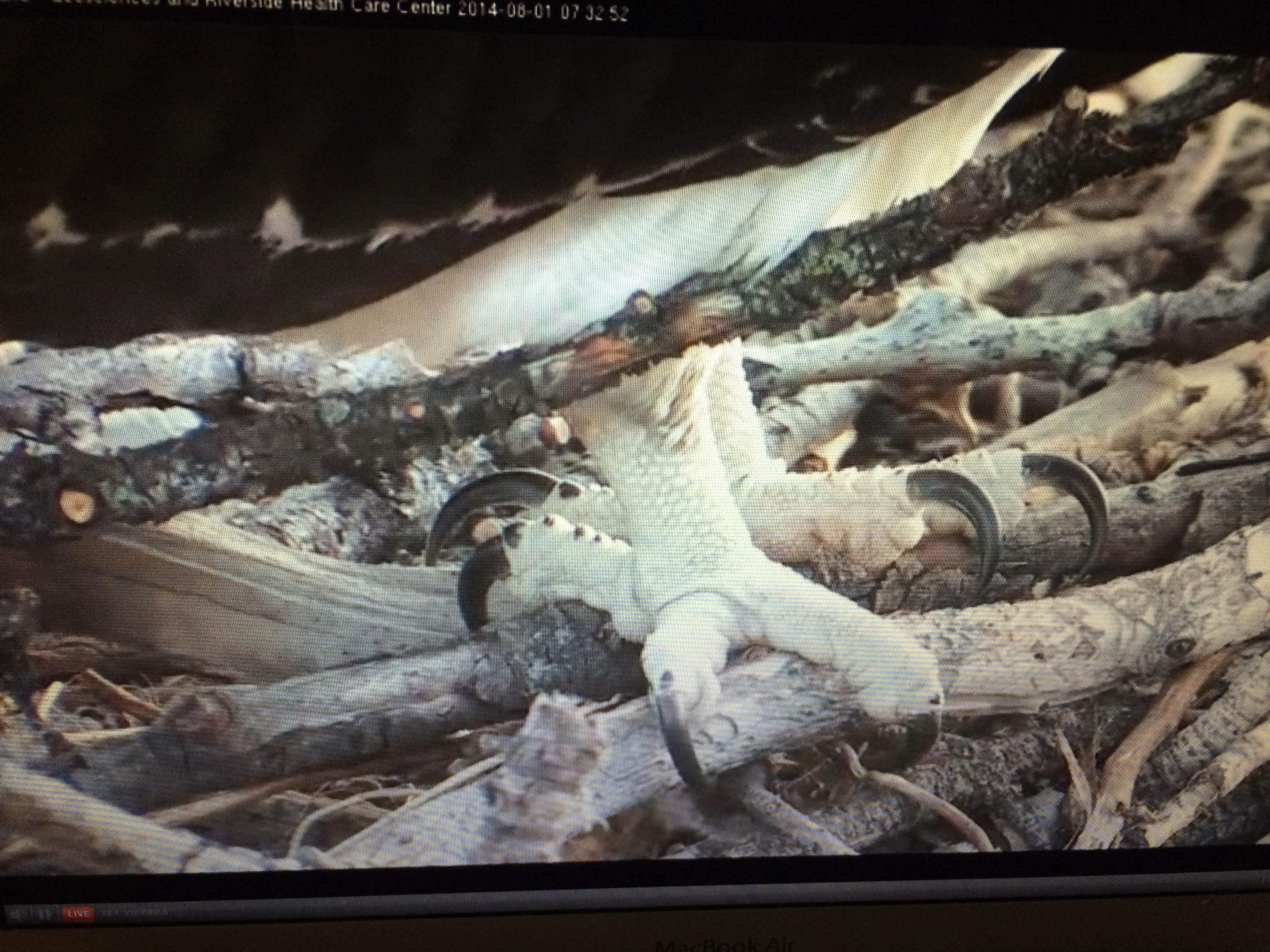
Just who are Iris and Stanley? They are two beautiful Ospreys that share their lives with us on a daily basis thanks to the Cornell live bird cams. This can be a blessing or a curse for me. A blessing in that I get to observe the majesty of their bodies, their behavior and indomitable spirits. A curse because when tragedy strikes their family it saddens me to the point of tears. This is what happened this year as Iris and Stanley began to add more offspring to their large family.

Through the cam, we are able to watch as huge sticks are brought to the nest atop a platform located at the mouth of Hellgate Canyon near the Clark Fork River in Missoula, Montana. They somehow manage to build those sticks into a nice nest with a cup in the center where the eggs will be deposited. Stanley is very proficient at supplying Iris with great sticks, both large and small. Many times he weaves them into the nest and later we may see Iris doing some “redecorating” as if she wasn’t quite satisfied with his building skills.

IMG_2761
Osprey Chick – 2014

The eggs are laid and through the cams we anxiously wait to see just how many there will be this year. One, two, then three. As she tends to her important duties, Stanley proves consistently what a great provider he is. Time and time again he dives into the river, catches huge fish, removes the head and brings the entire fish to the nest for Iris. But, he goes one step further. I have actually seen him tear small pieces of flesh from the fish and tenderly feed them to Iris. There relationship is solid and they will remain with each other until one of them dies at which time the remaining one will seek another mate for life. The drive to preserve the species is quite strong.

Iris and Stanley both tenderly care for their eggs keeping them warm, protecting them from the elements. I have seen her spread her wings and act as a “Mombrella” to shade her chicks from the sun or rain. This is exactly what she did one day when a freak hail storm began pummeling the nest. She and Stanley spread their wings in a futile attempt to protect their eggs. So close to pipping when disaster struck. All of the eggs sustained damage even though both parents valiantly fought to protect them. Faced with this tremendous loss, both parents instinctively knew it was too late to begin again. They must wait for next Spring. Hopefully next year they will meet with success and their offspring will fledge from the nest and begin their own journeys.

My heart was so heavy the day I watched the video and read about their loss. I shed tears and the sadness followed me for several days thereafter. The drama of watching them build, endure, suffer loss and carry on is a lesson from Mother Nature to us all. Never give up, keep trying and success will eventually be yours.

Happy bird searching!!!IMG_2786

Photos grabbed from live bird cams courtesy of Cornell University.


The Rookery


IMG_1562
Roseate Spoonbill with Chick – Smith Oaks Bird Sanctuary
IMG_0960
The Rookery

In the Spring the cacophony of sound that surrounds the High Island Rookery can be deafening. Just what is a Rookery? Think of it as a giant baby nursery for several species of birds. Cormorants, Roseate Spoonbills, Great Egrets, Snowy Egrets and Herons arrive each Spring from their wintering grounds in Central and South America. Driven by instinct to procreate, they begin the arduous task of building nests, laying their eggs and then waiting for the pipping to begin. As each new chick emerges from its shell and makes its way into the world, the parents begin hunting for food to feed the hungry begging mouths of their offspring. Featherless, flightless and totally dependent on Mom and Dad, they must eat, grow feathers and practice all the skills that will enable them to successfully fledge at the proper moment in time.

One of my favorite rookeries is located on High Island. High Island is so named because it is the highest point of land on the Bolivar Peninsula, a small barrier beach that borders the Gulf of Mexico. A huge salt dome rose from the earth to form this piece of land that is approximately 38 feet above sea level. A predator-free island is located in Clay Bottom Pond, which was originally created to help supply drinking water for the employees of the growing oil industry. Surrounded by marshy water, the birds find it to be an ideal location for building nests and raising their young. See more history of High Island at: http://www.houstonaudubon.org/default.aspx/MenuItemID/757/MenuGroup/High+Island.htm

IMG_5143
Great Egret Incubating Eggs

Once sites are selected in the trees and large shrubs on the island, the building begins. Each limb of the available trees is laden with nests, stacked one above the other. Picture a condominium for birds. Some wooden platforms have been built that are several layers high which are probably considered prime real estate in the bird world. (Take a moment here and think about where you might want your nest to be in a tree….on the top with blue sky above or on the bottom where bird droppings might fall upon you). The birds begin gathering sticks and fashioning their nests to their satisfaction.There is much stick stealing that occurs on the island as nest-building season begins. It appears frantic as everyone tries to “keep up with the Jones” in building a bigger and better nest. Once nest-building is completed, everyone gets busy laying their eggs followed by the boring job of incubation. They must be kept warm and turned periodically to keep the developing embryo from adhering to the inside of the egg-shell. It is an important job and all birds seem to instinctively know how to do these tasks. And of course, if one parent leaves the nest to forage for food, then the other parent usually steps in to take on the incubating duties. The ultimate goal is one that carries a heavy burden of responsibility….survival of their species on our planet.

IMG_1542
Juvenile “Teenage” Egrets

The spectacular show bursts into full glory when the eggs start hatching. The noise factor increases with the added voices of babies begging for food. Incoming and outgoing flights of the parents increase as they continually are fishing for food to fill their offspring’s bellies. As the young mature and their feathers begin to appear, they are unruly teenagers and some of their spiky feathers give new meaning to the term “bad hair day”.  As they grow, food demands increase and the babies begin doing other things like inspecting their environment, spying on other birds and nests, pulling at small sticks and “flappercizing”. They practice flapping their wings and working on building the muscles in preparation for their first flight. A fall from the nest or an aborted first flight that lands a chick in the water surrounding the Rookery could mean death since there are alligators lurking just waiting for a tasty appetizer to come close to their waiting jaws.

IMG_0977
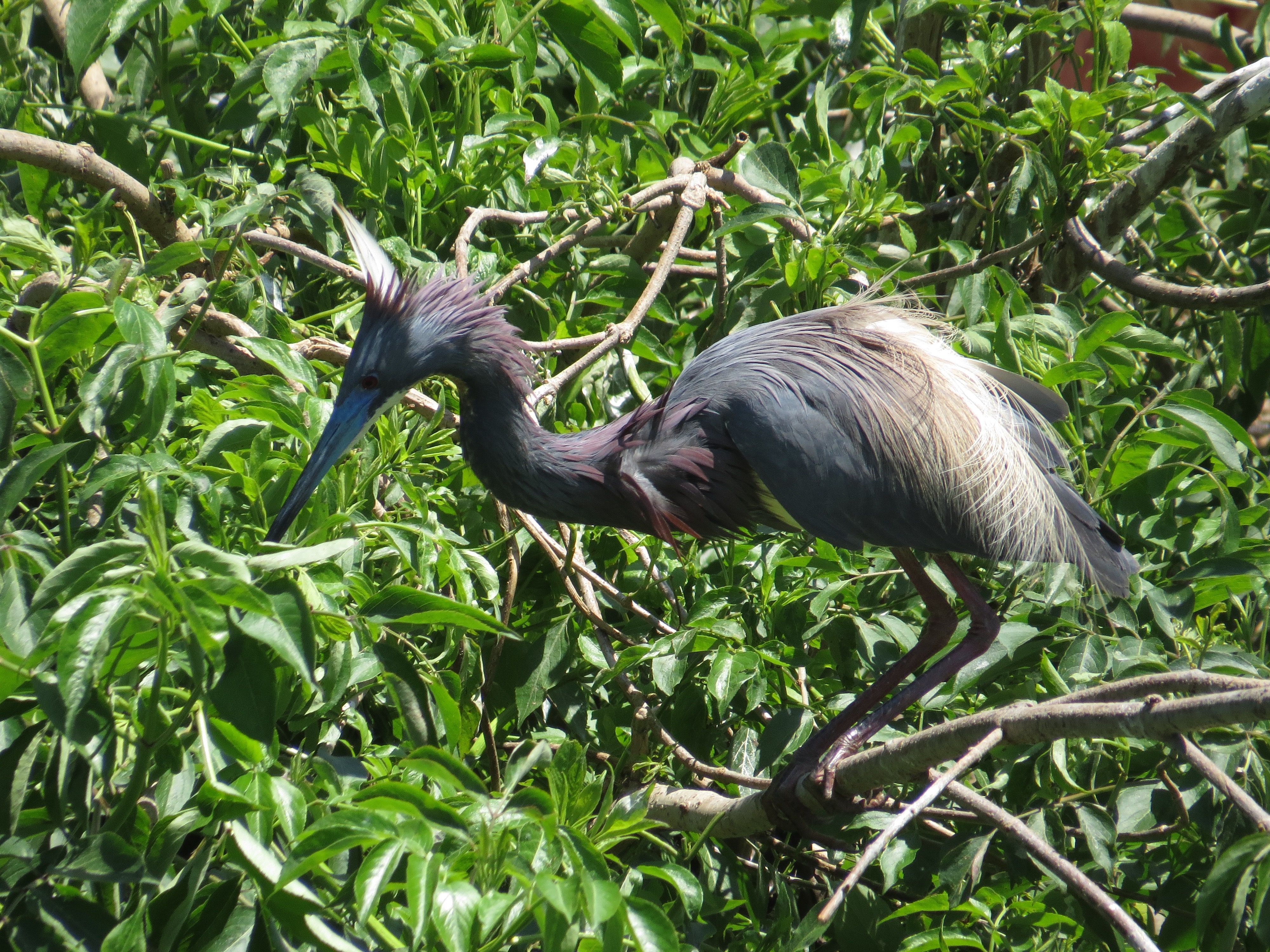
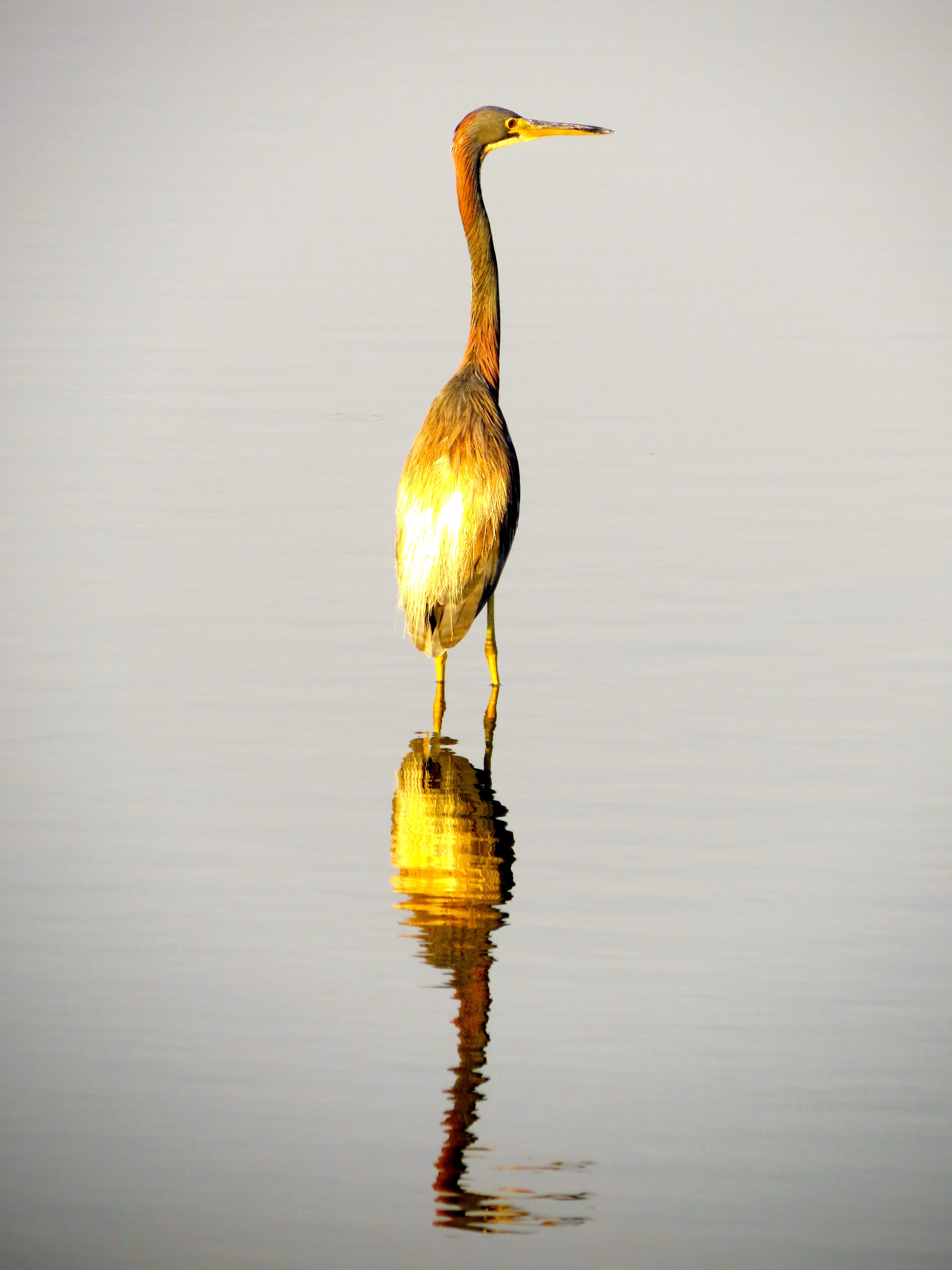
Tri-Colored Heron

I have stood for hours watching the activity surrounding the Rookery. I have snapped thousands of pictures trying to capture that which cannot be captured. It simply must be witnessed to be believed. So if you happen to get the opportunity to visit High Island,Texas, be sure to make time to visit the Smith Oaks Bird Sanctuary. I promise you won’t be disappointed.

No happy bird searching here. If you visit the Rookery, it’s Happy Bird Watching guaranteed!

PS: Don’t forget your bug spray!!!!

Ballerino Extraordinaire of the Bird World – December 7, 2015

IMG_4505
Reddish Egret – Galveston East Jetty – Personal Photo GKennedy

Today BFF Linda and I traveled South to meet up with some dear friends to enjoy the camaraderie of lunch, laughter and a few games of cards in a Denny’s restaurant. As we traveled South towards Corpus Christi, Linda and I reminisced about one of the most beautiful experiences we were privileged to witness at a Rio Grande Valley Birding Festival event a few years ago.

As usual, we were up early, traveling in the dark to the convention center in Harlingen to board our bus for our planned outing to some mudflats located behind the South Padre Island Convention Center. We are never guaranteed bird sightings. Many times it simply is the luck of the draw. Today we hit the jackpot!

We already had an extremely full day of shore bird identification. It was a very, very cold and windy day and standing in the biting wind being buffeted on all sides while trying to identify some birds with cold binoculars can be exhausting. When we arrived at the mudflats, we were immediately captivated by two Tri-Colored Herons playfully challenging each other. They ran, jumped and skittered across the mudflats in a choreographed display that can only be called magical. We watched these two for quite some time and soon they were joined by one of my favorite birds, a Reddish Egret. He was regal in his beautiful rust colored feathers that were blowing gracefully in the breeze created by his cavorting. He pranced, skipped, hopped and darted to and fro, changing directions effortlessly. If birds could be ballerinas, then this bird was definitely the premier danseur noble.

A few years ago, I had the privilege of attending a ballet performed by the Russian Ballet troupe in the Hermitage Theatre in St. Petersburg, Russia.  Because of traffic, my friend and I had arrived with our group a little late and we rushed up the stairs to the theatre afraid we would not be able to get a good seat. We were delightfully surprised to find ourselves being ushered to the front row of the theatre directly in front of the orchestra pit. We breathlessly took our seats as the curtain rose and the orchestra struck the first chords of Swan Lake. I knew at that moment that what I was about to witness was going to be one of the best and most touching memories of my life. I sat captivated for the entire ballet, tears streamed unchecked over my face just from the sheer beauty of what I was seeing, the emotion that I was experiencing. As the story unfolded and I watched the rib cages of the swans as they heaved in and out, I found myself holding my breath. My heart skipped beats as the raw emotion of such beauty washed over me. At that moment, the ballerinas were the swans and the power of their tremendous artistry and the timeless majesty of the music was unsurpassed by anything I had ever seen, heard or experienced.

That cold winter day on the mudflats of South Padre Island in South Texas, what I witnessed approached the indescribable beauty of that Russian ballet. It was spectacular. It was magical. It was beauty as only nature can provide at moments when we are least expecting it. I was captivated and in awe of nature’s premier danseur noble, the Reddish Egret.

Happy bird searching!


The Magnificent Frigatebird


It was a late Spring Day with summer gently nudging its way into the South Texas coastline. Another BFF of mine, Kathleen and I are out doing our “Thelma and Louise” thing on the twenty three miles of beachfront located in Matagorda Texas.  A favorite fishing spot for many people, for us it is one of our favorite beach combing areas and of course a great bird watching venue.

IMG_6054
Brown Pelicans on beach patrol

This day was a little different from our usual beach jaunts though. We drove perhaps 10 miles or so down the beach and selected a spot to stop and begin our beach combing work. Because of some recent health issues, I was too fatigued to do the miles of walking required to thoroughly scour the beach for sand dollars, whelks, starfish, cockle shells, sundials or any of the many other treasures we hoped to find. So for today, Kathleen had the beach entirely to herself.

I pulled my beach chair from the car, set it in place and planted myself to enjoy the ocean breezes, the blue sky with its scudding white fluffy clouds, and the many different birds that might present themselves to me for observation. The screeching laughing gulls and the terns were scanning the breaking waves at the shoreline in search of a meal, the sanderlings and the “always there” Willets raced back and forth along the shoreline and the Brown Pelicans flew in perfect formation patrolling the beach. So I settled in to rest, enjoy and just be present in that moment. I leaned back in my beach chair and gazed up at the cloud formations and it happened.IMG_6105

I spotted a very large bird soaring high in the sky, higher than most of the regular beach loving birds. I could hardly believe my good fortune. She was huge and effortlessly gliding with the thermal waves around, up and down and through that beautiful blue sky. She was the queen of the air, a magnificent specimen for sure. So impressive that this bird has the name of Magnificent Frigatebird. A name like that tells us right up front that this must be a special bird. And so she is. Her giant forked tail was my first clue to her identity coupled with her large size and great white breast. The male and female are distinctively different from one another, more so than any other bird species. She has a massive white breast and he sports a brilliant red throat. This bird has a nickname of Man O’War because of its speed, sleek body lines and the ability to steal fish from other birds. They spend most of their lives soaring high above the ocean and rarely descend to land on the ocean. They build shaky platforms in mangroves on which to lay their eggs. A group of frigatebirds is known as a “flotilla” or “fleet” of frigatebirds. Seriously…a fleet or flotilla!  With a wingspan of 6-8 feet these are extremely large birds!

Unfortunately for this one moment in time, I had forgotten my camera back at our hotel room so I was forced to record this beautiful bird only in my memory. Later I wrote about her in my Bird Journal and painted a poor image of what I had seen. I have no regrets of not having the photos (Well, maybe a few).  I was forced to record it with the best camera in the world, my eyes, and store it on the best computer hard drive ever made, the brain. That moment, the memory of her beauty will remain with me always. It was a special communion with nature at its finest.IMG_6803

Happy bird searching!

Road Trip – December 5-6, 2015

IMG_6793
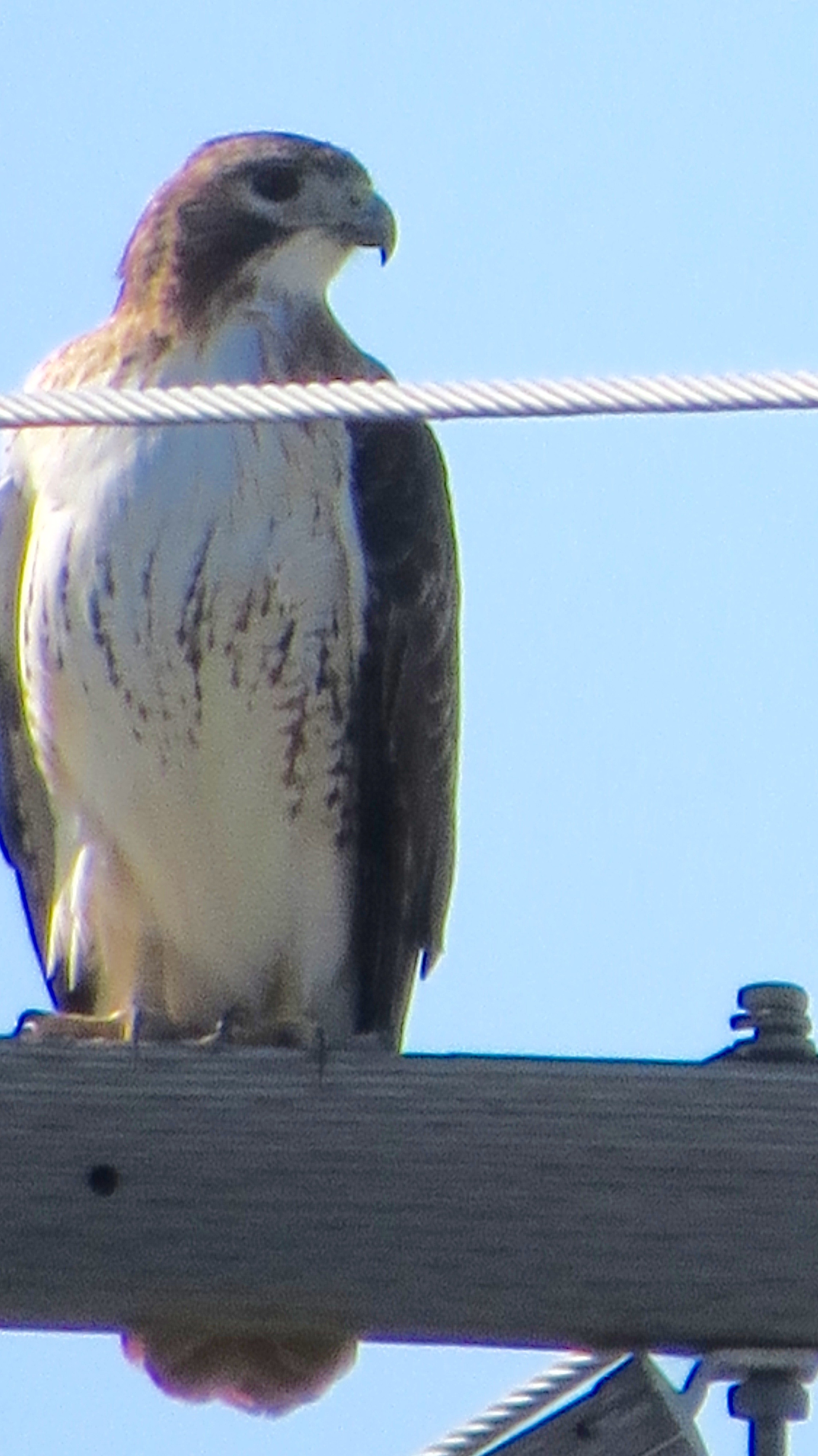
Red-Tailed Hawk

Today BFF Linda and I headed toward College Station to attend a relative’s wedding. Once again we were blessed with a beautiful crystal blue sky day, perfect temperatures and we set out in good spirits.  It is my practice to never travel (even within the city) without having my binocs with me. To see a bird and not be able to get an up close and personal look for identification is very frustrating. So there one of the best tools of birding remains….in my car to satisfy my desire to feed my voracious appetite of learning more about this relatively new hobby of mine.

It would take us approximately two hours or so to reach our destination with many miles of potential bird perches between start and finish. Driving along the highways presents you with an excellent opportunity to BBC (Bird By Car). As I drive, my eyes are always scanning fence lines, fence posts, power lines and poles. Mile after mile there are perching birds or soaring birds if we train ourselves to be more observant.

IMG_6736
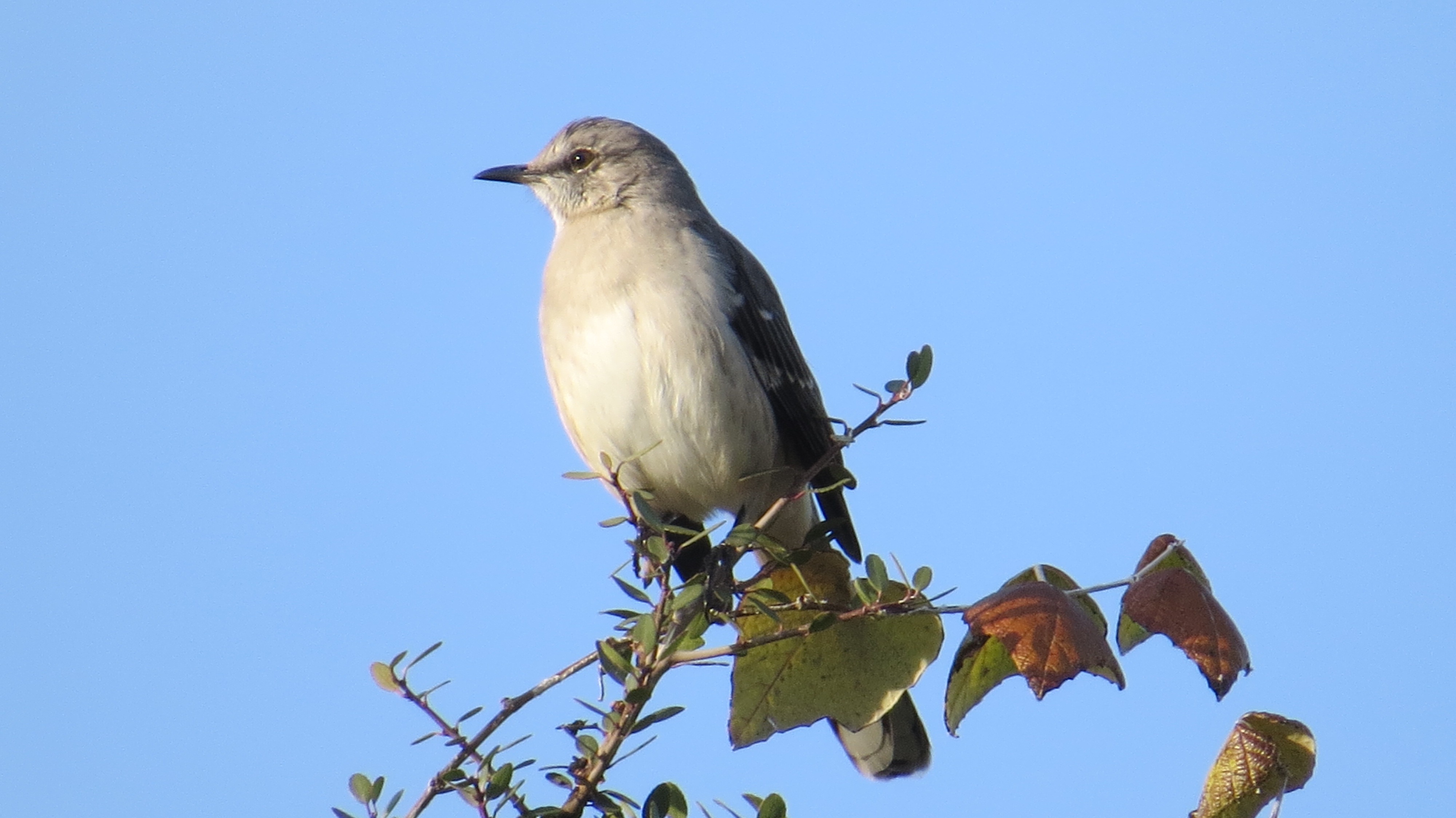
Northern Mockingbird – State Bird of Texas

When a bird is spotted, we try to pull over, stop and get the bird into our binoculars for identification.Then off again until we see another one. On our trip today we spotted many Starlings, Red-tail Hawks, a Crested Caracara, Black Vultures, and Great Blue Herons. The thrill is in the hunt. And even if it is one we have seen many times before, the fulfillment and satisfaction of the spotting and identification never gets old.

Happy bird searching!